Purpose?
Transfer the planned position.

A surgical guide transfers a planned implant position into surgery. Guiding structures can constrain instrument position and direction. It supports treatment without replacing planning or clinical control.
For training & practice ↓
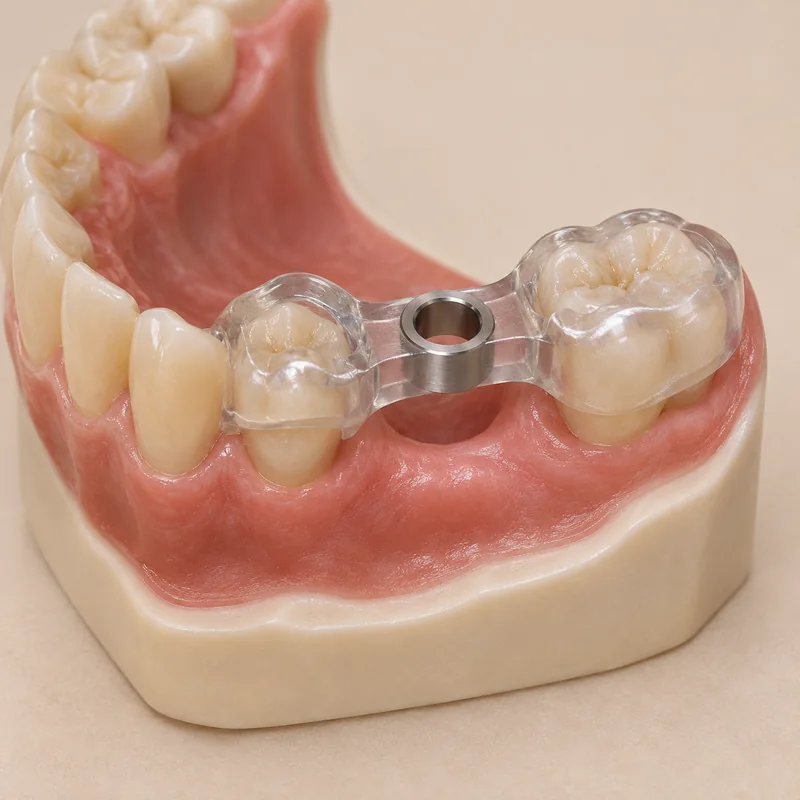
Bone, neighbouring structures and the future restoration are considered together.
A correctly supported guide provides direction. Its fit and agreement with the plan must be checked.
Scanning, data alignment, manufacturing and use can introduce deviations. A guide does not remove surgical risk.
Transfer the planned position.
Fit and verified planning.
No.
Three steps. No audio.
Each scene can also be selected manually.

Silent educational film with German on-screen text and simplified teaching images. Not a patient case or a promised treatment outcome. The full English explanation is available below.
Bone, neighbouring structures and the future restoration are considered together.
A correctly supported guide provides direction. Its fit and agreement with the plan must be checked.
Scanning, data alignment, manufacturing and use can introduce deviations. A guide does not remove surgical risk.
A guide provides static guidance. Dynamic navigation tracks instruments on a display during surgery.
No. It is a surgical planning aid, not an appliance for sleeping.
That depends on the system and plan; workflows offer different levels of guidance.
No. The appropriate approach depends on the individual situation.
Editorially suggested question to discuss with Dr Niusha Barahmand Pour:
Which type of guidance fits this case and what are its limits?
Implant planning should explain how position is selected and checked.
Discuss implant planningAppointment selection at DoctolibA guide provides static guidance. Dynamic navigation tracks instruments on a display during surgery.
Editorial research: . General information, not an individual diagnosis or treatment recommendation. Teaching illustrations are simplified and do not depict a patient case.