Purpose?
Support planned positioning.

Digital planning data can support implant positioning. A static guide can provide physical guidance; dynamic navigation displays instrument position during surgery. Both remain clinician-controlled procedures.
For training & practice ↓
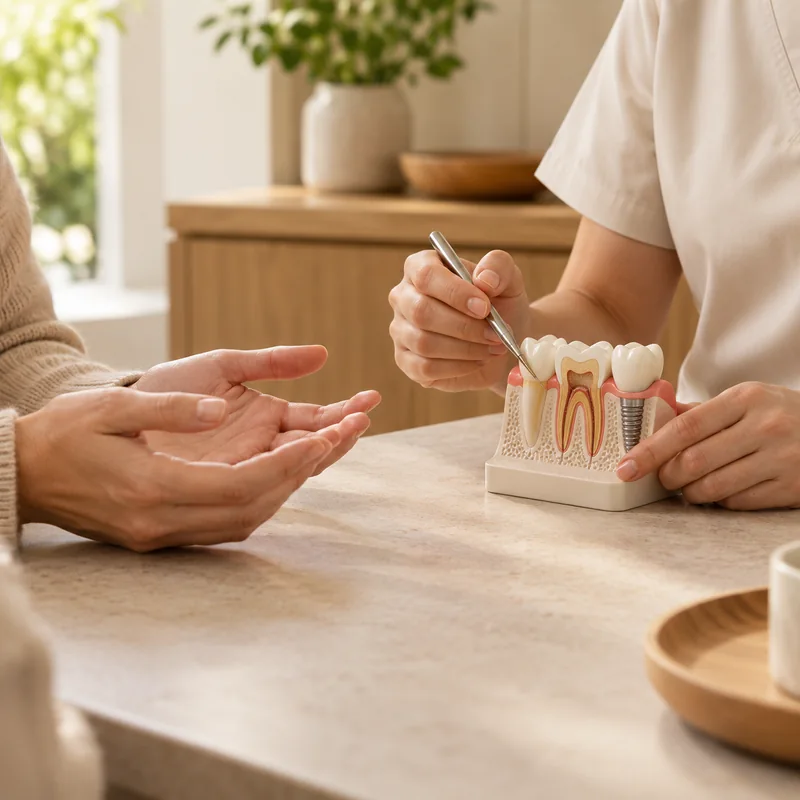
The intended restoration and anatomy are considered together. Data must be suitable and correctly aligned.
Static guidance and dynamic navigation work differently. Suitability depends on findings, access and the treatment plan.
Deviations remain possible. Data quality, registration, seating or calibration and clinical experience affect implementation.
Support planned positioning.
Static and dynamic approaches.
Appropriate planning and control.
Three steps. No audio.
Each scene can also be selected manually.

Silent educational film with German on-screen text and simplified teaching images. Not a patient case or a promised treatment outcome. The full English explanation is available below.
The intended restoration and anatomy are considered together. Data must be suitable and correctly aligned.
Static guidance and dynamic navigation work differently. Suitability depends on findings, access and the treatment plan.
Deviations remain possible. Data quality, registration, seating or calibration and clinical experience affect implementation.
A digital target is a plan, not a success guarantee or completed restoration.
Computer assistance does not automatically mean robotic or autonomous surgery.
It is not universally superior for every case or outcome. Benefits and burden require individual assessment.
No. Guided procedures can still have complications.
Editorially suggested question to discuss with Dr Niusha Barahmand Pour:
What role could digital guidance play in my specific plan?
Digital support can be discussed as part of implant planning.
Discuss implant planningAppointment selection at DoctolibA digital target is a plan, not a success guarantee or completed restoration.
Editorial research: . General information, not an individual diagnosis or treatment recommendation. Teaching illustrations are simplified and do not depict a patient case.