Pulp exposed?
No.

In indirect pulp capping, dentine remains over the pulp. The term is used for pulp-preserving management of deep caries, sometimes with an additional lining material. Findings, careful restoration and follow-up matter; an extra liner is not always required.
For training & practice ↓
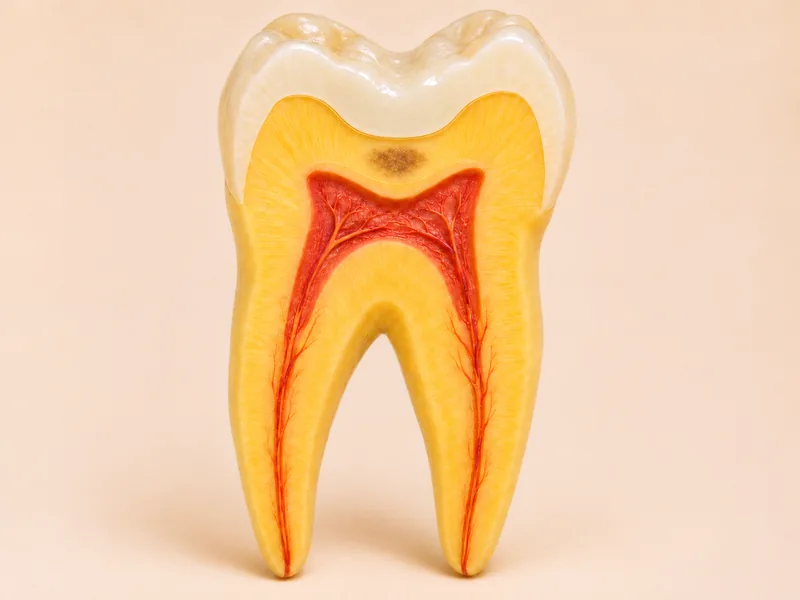
Unlike direct capping, the pulp is not exposed. Tissue separates it from the restoration.
Removal and restoration depend on lesion depth and pulp status. Indirect protection is not simply the use of a particular paste.
A suitable seal and reviews are part of care. New or persistent symptoms need reassessment.
No.
Not routinely.
No; reviews remain important.
Three steps. No audio.
Each scene can also be selected manually.

Silent educational film with German on-screen text and simplified teaching images. Not a patient case or a promised treatment outcome. The full English explanation is available below.
Unlike direct capping, the pulp is not exposed. Tissue separates it from the restoration.
Removal and restoration depend on lesion depth and pulp status. Indirect protection is not simply the use of a particular paste.
A suitable seal and reviews are part of care. New or persistent symptoms need reassessment.
An additional material alone is not a complete pulp-preserving strategy. Diagnosis, removal, sealing and review belong together.
No. Routine lining is not recommended for deep caries in suitable vital permanent teeth; the decision remains individual.
The terms overlap but name different aspects: selective describes removal, while indirect describes dentine remaining over the pulp.
Yes. Pulp preservation cannot be achieved in every tooth.
Editorially suggested question to discuss with Dr Niusha Barahmand Pour:
What roles do remaining dentine and the restoration seal play in my tooth?
With deep decay, it helps to understand the approach close to the pulp.
Discuss deep cariesAppointment selection at DoctolibAn additional material alone is not a complete pulp-preserving strategy. Diagnosis, removal, sealing and review belong together.
Editorial research: . General information, not an individual diagnosis or treatment recommendation. Teaching illustrations are simplified and do not depict a patient case.