Will I stay awake?
Yes. Local anaesthesia does not remove consciousness.

In infiltration anaesthesia, local anaesthetic is placed in the tissue near the tooth being treated. From there it reaches small nerve branches and temporarily inhibits signal transmission. It is often used in the upper jaw; the suitable technique depends on the tooth, tissues and planned procedure.
For training & practice ↓
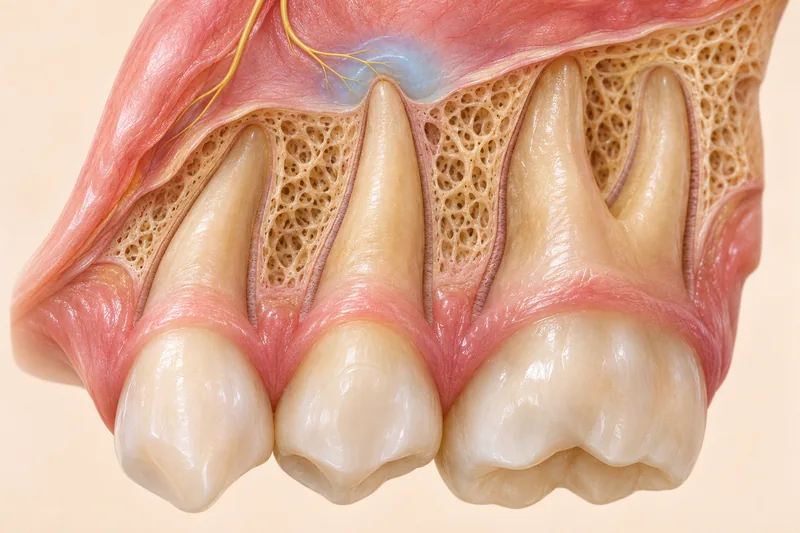
Local anaesthetic is placed in the surrounding tissue, not in the tooth crown. The location depends on the planned procedure.
The medicine spreads through tissue and reaches small nerve branches. It can temporarily inhibit pain signal transmission; this does not permanently remove sensation from the tooth.
The effect is checked before treatment begins. Tell the clinician if you still feel pain. Avoid biting your lip or cheek while it remains numb.
Yes. Local anaesthesia does not remove consciousness.
It is common there; selection depends on the situation.
Tell the clinician so the effect can be checked.
Three steps. No audio.
Each scene can also be selected manually.

Silent educational film with German on-screen text and simplified teaching images. Not a patient case or a promised treatment outcome. The full English explanation is available as text.
Local anaesthesia leaves you awake and acts in a limited area. General anaesthesia is a different procedure and should not be confused with infiltration anaesthesia.
The bone structure there often allows local anaesthetic to reach the small nerve branches effectively. Infiltration may also be useful elsewhere depending on the situation; it is not restricted to the upper jaw.
Infiltration acts near an individual tooth at smaller nerve branches. A nerve block places medicine near a larger nerve, so it may affect a wider area supplied by that nerve.
This depends on the medicine, amount, tissues and clinical situation. A lip or cheek can remain numb longer than the tooth. Your experience and the clinician’s check of the effect therefore matter.
Mention known allergies, previous reactions and your medicines. While your lip or cheek remains numb, you may bite it without noticing. Follow the treating practice’s instructions and report unusual or persistent symptoms.
You can bring this question to your appointment:
Which anaesthetic technique is planned for this tooth, and how will we check that it is working adequately?
You can discuss any questions or worries about local anaesthesia before treatment.
Arrange an assessmentAppointment selection at DoctolibLocal anaesthesia leaves you awake and acts in a limited area. General anaesthesia is a different procedure and should not be confused with infiltration anaesthesia.
Editorial research: . General information, not an individual diagnosis or treatment recommendation. Teaching illustrations are simplified and do not depict a patient case.