What should be clarified first?
Where the fragment lies and which steps have been completed.

Instrument separation means that part of a fine instrument breaks during root canal treatment and remains within the canal. It is a possible complication. Management depends on location, infection, cleaning already achieved and the risks of removal.
For training & practice ↓
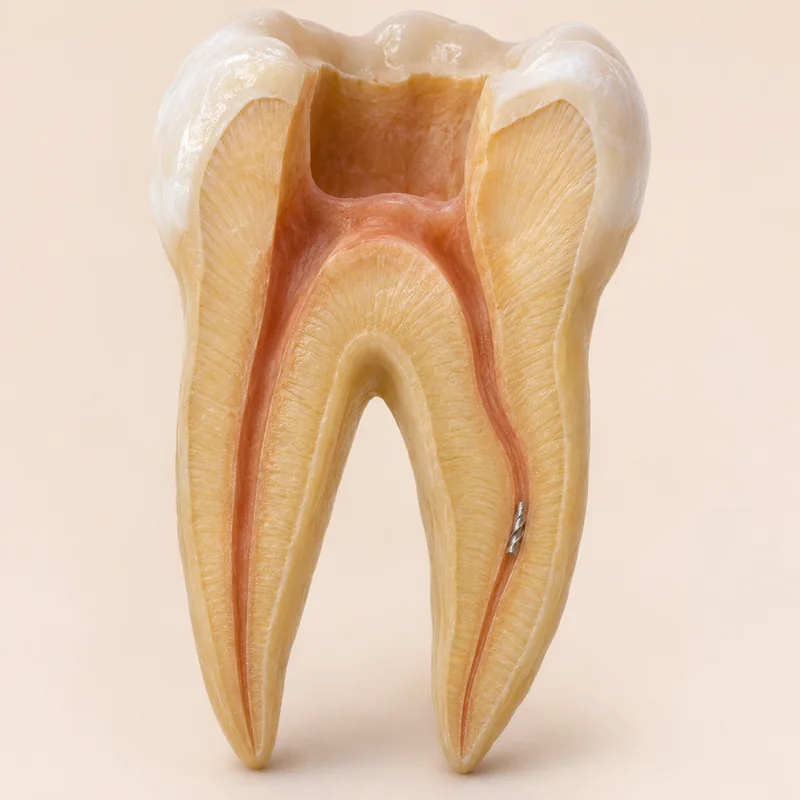
Instruments undergo stress in narrow or curved canals. Fatigue or binding may contribute to fracture; not every event can be reliably prevented.
A fragment may obstruct access to part of the canal. Infection and the extent of cleaning influence assessment.
Depending on findings, options include removal, bypassing or leaving it with an adapted plan. A risky retrieval attempt can damage additional tooth tissue.
Where the fragment lies and which steps have been completed.
What options, limitations and follow-up are appropriate.
For increasing pain, swelling or fever.
Three steps. No audio.
Each scene can also be selected manually.

Silent educational film with German on-screen text and simplified teaching images. Not a patient case or a promised treatment outcome. The full English explanation is available below.
Instruments undergo stress in narrow or curved canals. Fatigue or binding may contribute to fracture; not every event can be reliably prevented.
A fragment may obstruct access to part of the canal. Infection and the extent of cleaning influence assessment.
Depending on findings, options include removal, bypassing or leaving it with an adapted plan. A risky retrieval attempt can damage additional tooth tissue.
An instrument fragment is retained metal. Root-filling material is intentionally placed to fill the canal; both can appear bright on radiographs.
No. Benefits and risks are assessed and discussed individually.
No. The full tooth and infection findings matter; the fragment alone cannot determine prognosis.
Where the fragment lies, how much cleaning has been possible, and which options and risks apply. The discussion should also cover the next steps and planned follow-up.
An editorially suggested question for a discussion with Dr med dent Niusha Barahmand Pour:
Which option best preserves this tooth, and what risks remain?
Concerned about instrument separation? Ask for a clear explanation of findings, options and follow-up.
Discuss the findings and planAppointment selection at DoctolibAn instrument fragment is retained metal. Root-filling material is intentionally placed to fill the canal; both can appear bright on radiographs.
Editorial research: . General information, not an individual diagnosis or treatment recommendation. Teaching illustrations are simplified and do not depict a patient case.