Where is it delivered?
Around the tooth-supporting tissues.

Intraligamentary anaesthesia is a local technique in which anaesthetic is delivered around a tooth into its supporting tissues. It spreads towards the root tip. The aim is a limited area of dental anaesthesia; lips and tongue are often less extensively numb than with a nerve block. The appropriate technique depends on the procedure, findings and personal risks.
For training & practice ↓
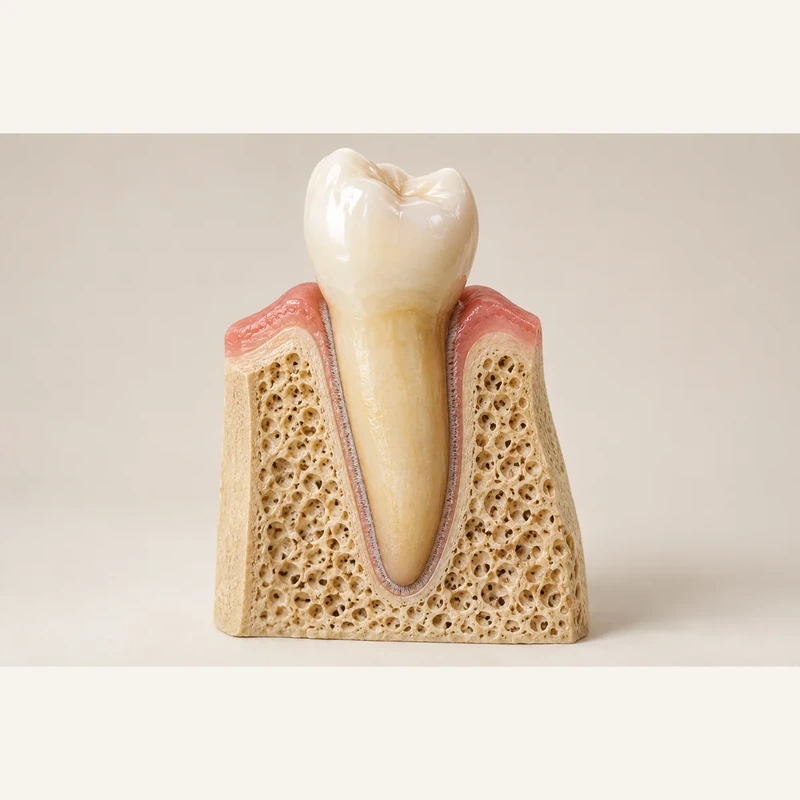
The periodontal ligament surrounds the root and connects it to bone. Anaesthetic can spread from this region to adjacent structures. The dental team carries out the procedure.
Adequate numbness is checked before treatment. Pressure and pain are different sensations. If something hurts, use the agreed stop signal; additional anaesthesia may be needed.
Medical history, local findings and planned duration guide selection. The technique may be used alone or as a supplement. It is not automatically the best option for every tooth or person.
Around the tooth-supporting tissues.
Yes; local anaesthesia is not general anaesthesia.
Tell the team immediately or use the agreed stop signal.
Three steps. No audio.
Each scene can also be selected manually.

Silent educational film with German on-screen text and simplified teaching images. Not a patient case or a promised treatment outcome. The full English explanation is available as text.
The intraligamentary technique acts at the tooth-supporting tissues. A nerve block acts near a larger nerve and numbs its distribution. Both are forms of local anaesthesia.
The solution is delivered into the tooth-supporting region, not deliberately into a nerve trunk. Its effect comes from local spread of the anaesthetic.
No. The aim is limited numbness, but spread varies. Avoid biting tissues that still feel numb and follow the team’s advice.
Report conditions, medicines, suspected allergies and previous reactions to anaesthetics. Also mention any previous failure to become adequately numb.
You can bring this question to your appointment:
Which anaesthetic technique suits the procedure, and how will we check it has worked before starting?
An individual assessment can clarify the findings and whether referral is needed.
Arrange an assessmentAppointment selection at DoctolibThe intraligamentary technique acts at the tooth-supporting tissues. A nerve block acts near a larger nerve and numbs its distribution. Both are forms of local anaesthesia.
Editorial research: . General information, not an individual diagnosis or treatment recommendation. Teaching illustrations are simplified and do not depict a patient case.
If you turn this on, this website stores which guides you open, separately from advertising preferences. The markers expire after a fixed 30-day period from activation. The list is not sent to us by this feature. You can turn it off here and delete the markers.
Other people using the same browser profile can also see the markers. German and English versions share one marker. Expired entries are removed the next time you open a page with this feature; deleting browser data may remove them earlier. “Viewed” means opened, not read or completed.