One cause?
Several factors usually interact.

Caries risk concerns the likelihood of new decay or progression of existing lesions. Assessment combines previous findings with daily routines, saliva, fluoride protection and other influences. It is not a certain prediction and cannot be inferred from sugar intake or one number alone.
For training & practice ↓
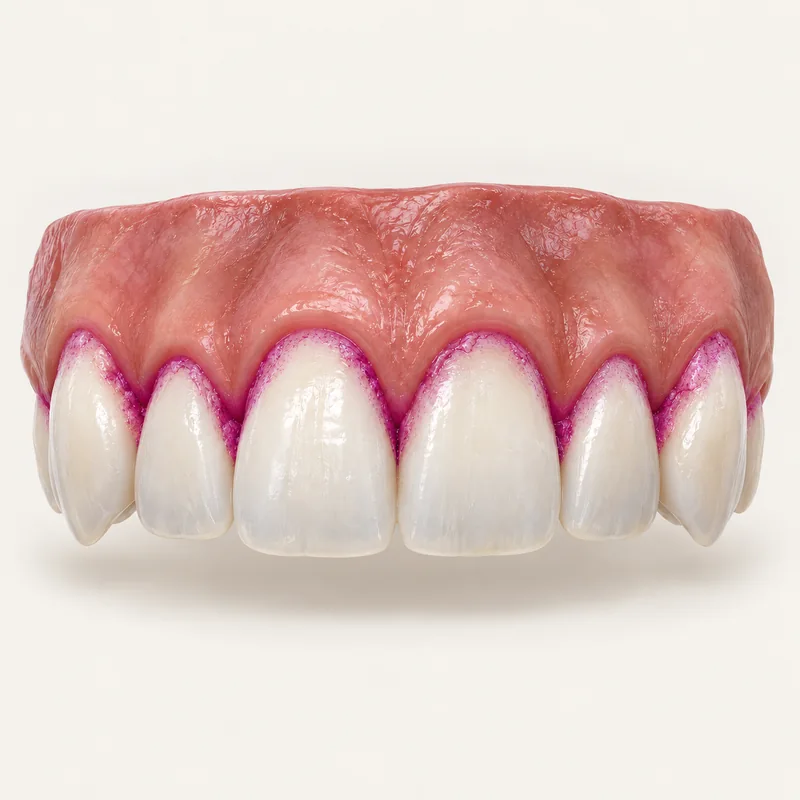
New lesions, past treatment, dry mouth, cleaning and eating patterns provide different kinds of information.
Frequent sugar exposure and low saliva may be unfavourable. Fluoride and effective cleaning are protective; no single factor explains every finding.
Prevention and review intervals are discussed individually. Changed circumstances may require a new assessment.
Several factors usually interact.
Yes, when findings or circumstances change.
Appropriate prevention and review.
Three steps. No audio.
Each scene can also be selected manually.

Silent educational film with German on-screen text and simplified teaching images. Not a patient case or a promised treatment outcome. The full English explanation is available below.
New lesions, past treatment, dry mouth, cleaning and eating patterns provide different kinds of information.
Frequent sugar exposure and low saliva may be unfavourable. Fluoride and effective cleaning are protective; no single factor explains every finding.
Prevention and review intervals are discussed individually. Changed circumstances may require a new assessment.
Risk concerns possible future development. Activity concerns an existing lesion. Caries experience records previous or current damage and restorations.
No. Risk and diagnosis of an existing lesion are different statements.
Cleaning matters but is not the only influence. Frequent sugar exposure, low saliva, hard-to-reach areas and fluoride protection also need consideration.
No. Medical conditions, medicines, cleaning circumstances and eating patterns may change it.
Editorially suggested question to discuss with Dr Niusha Barahmand Pour:
Which modifiable factors matter most in my situation?
Bring questions about dry mouth, diet and cleaning.
Discuss personal caries preventionAppointment selection at DoctolibRisk concerns possible future development. Activity concerns an existing lesion. Caries experience records previous or current damage and restorations.
Editorial research: . General information, not an individual diagnosis or treatment recommendation. Teaching illustrations are simplified and do not depict a patient case.