Does a baby tooth fall out first?
The first permanent molar appears behind the row of baby teeth.

The first permanent molar erupts behind the baby molars. Its chewing surface appears gradually. You may see only a few cusp tips while gum tissue still covers some of the grooves.
For training & practice ↓
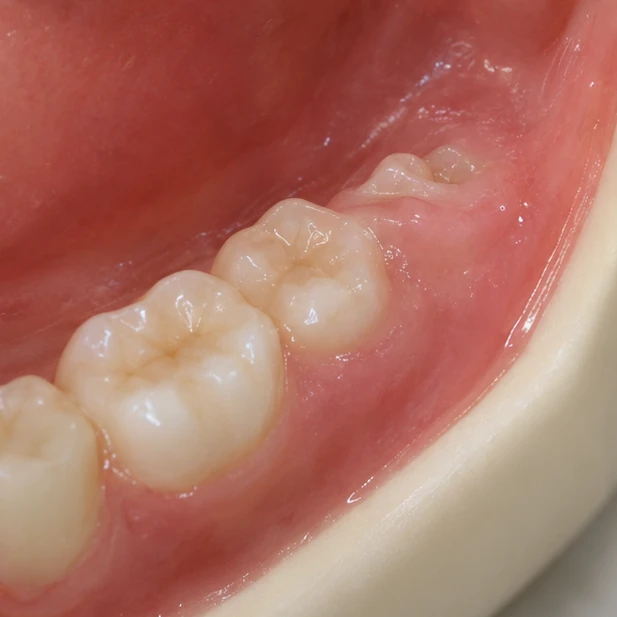
The first cusp tips appear behind the baby molars. This tooth has no primary predecessor.
Grooves run between the cusps. During eruption it can be difficult to reach them with a brush.
When brushing together, a carer can guide the brush to surfaces the child finds hard to reach.
The first cusp tips appear behind the baby molars. This tooth has no primary predecessor.
Grooves run between the cusps. During eruption it can be difficult to reach them with a brush.
When brushing together, a carer can guide the brush to surfaces the child finds hard to reach.
The first permanent molar appears behind the row of baby teeth.
Individual cusp tips may appear before the rest of the surface.
Show the dental team the spot that is difficult to clean behind the last baby molar.
Three steps. No audio.
Each scene can also be selected manually.

Silent film with English on-screen text and simplified teaching images.
The first permanent molar extends the row. A baby molar does not have to fall out to make room for it.
The emerging surface is lower than the teeth in front of it. Bristles can pass over it. In a study of 57 children, plaque accumulated particularly on chewing surfaces of molars that had yet to finish erupting.
Look just behind the last baby molar in good light. Approach from the cheek with a small brush if that helps you reach the exposed cusps. There is no need to push gum tissue off the emerging tooth.
The dental team assesses the grooves, decay risk and whether the exposed surface can be kept dry. If access is tricky, ask to be shown the spot at your child’s check-up.
A question to ask
Can the brush reach the new chewing surface yet, and might a sealant be appropriate?
The dental team can examine the emerging chewing surface at a check-up.
Choose an appointmentAppointment selection at DoctolibStage of eruption and contact with an opposing tooth affect access for cleaning. Groove shape alone gives an incomplete picture of risk.
Editorial research: . General information, not an individual diagnosis or treatment recommendation. Teaching illustrations are simplified and do not depict a patient case.
If you turn this on, this website stores which guides you open, separately from advertising preferences. The markers expire after a fixed 30-day period from activation. The list is not sent to us by this feature. You can turn it off here and delete the markers.
Other people using the same browser profile can also see the markers. German and English versions share one marker. Expired entries are removed the next time you open a page with this feature; deleting browser data may remove them earlier. “Viewed” means opened, not read or completed.