Purpose?
Anchorage during tooth movement.

Orthodontic mini-implants are small temporary anchorage screws placed in bone. They provide support for selected tooth movements and are removed when no longer needed. They do not replace missing teeth.
For training & practice ↓
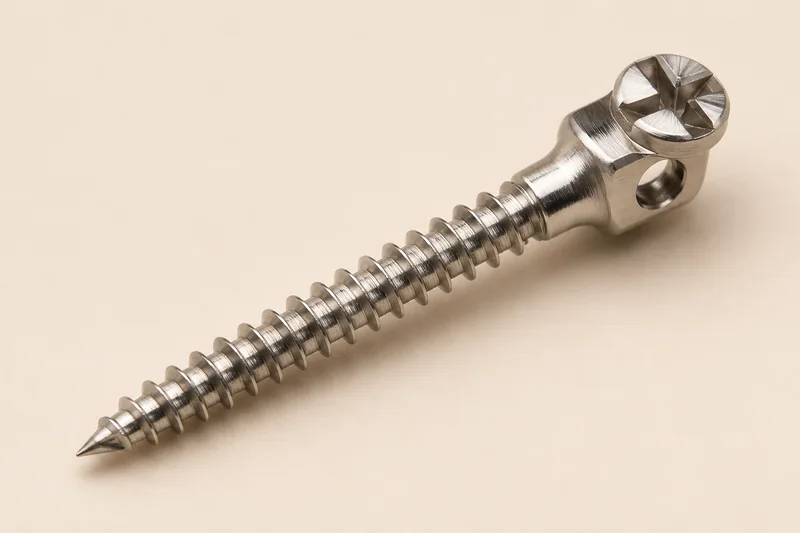
A connection between the screw and appliance can support planned forces. Position and loading are carefully planned.
Placement is usually performed under local anaesthesia. Nearby roots and other structures need to be considered.
Small screws can loosen or become inflamed. Report pain, loosening or changes to the treating team.
Anchorage during tooth movement.
For the planned treatment phase.
Contact the treating team; do not adjust it yourself.
Three steps. No audio.
Each scene can also be selected manually.

Silent educational film with German on-screen text and simplified teaching images. Not a patient case or a promised treatment outcome. The full English explanation is available as text.
Its purpose differs from an implant supporting a crown or denture.
Usually not. It is intended as temporary anchorage.
No. Do not add or alter elastics or tighten the screw yourself.
No. Loosening, soft-tissue irritation and injury to neighbouring structures are possible.
Editorially suggested question to discuss with Dr Niusha Barahmand Pour:
Why is additional anchorage needed and who will supervise it?
A temporary anchorage screw is planned? Discuss its purpose, alternatives and care with the treating team.
Discuss the treatment planAppointment selection at DoctolibIts purpose differs from an implant supporting a crown or denture.
Editorial research: . General information, not an individual diagnosis or treatment recommendation. Teaching illustrations are simplified and do not depict a patient case.