Are all gels equally acidic?
Formulations vary.

Sports gels supply concentrated carbohydrate during exercise. If a gel contains fermentable sugars, plaque bacteria can make acids from them. Acidic formulations may also act directly on enamel. Recipes, frequency of use and contact time vary.
For training & practice ↓
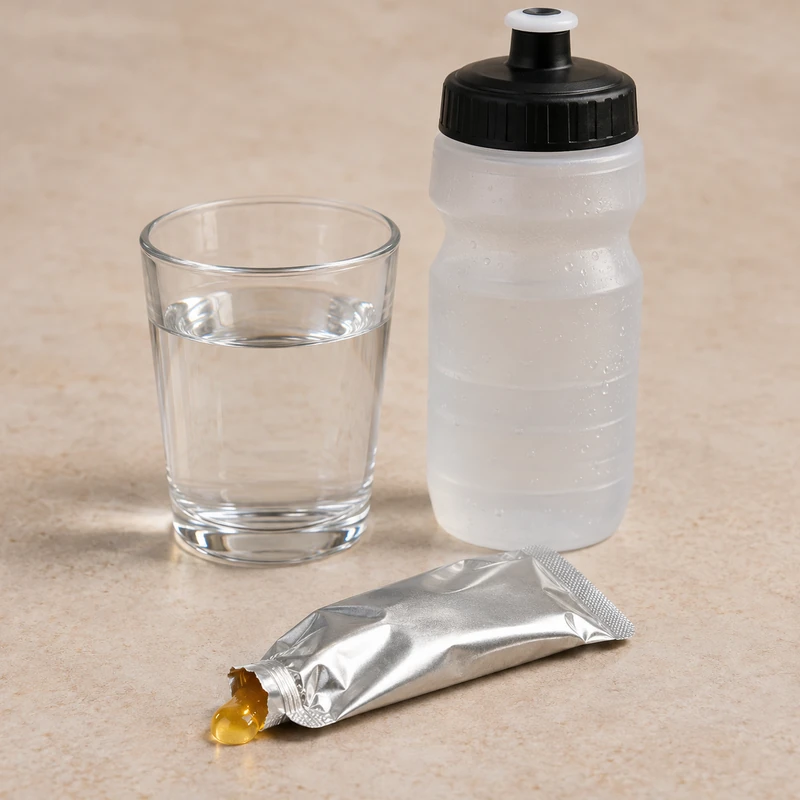
Gels are designed for situations in which carbohydrate is needed during sport. The formulation determines which sugars and acidifying ingredients are present.
Plaque bacteria make acid from fermentable carbohydrate. An acidic gel adds direct contact between product acids and the tooth surface.
Water after a serving can help clear residues from the mouth. Regular brushing with fluoride toothpaste complements appropriate sports nutrition.
Formulations vary.
A single exposure says little about individual risk.
Fuel intake should match exercise needs.
Three steps. No audio.
Each scene can also be selected manually.

Silent film with English on-screen text and simplified teaching images.
A gel is concentrated and taken in a portion. A drink may repeatedly contact teeth while being sipped.
It can measure a product's pH or the amount of acid requiring neutralisation. This cannot predict damage in an individual athlete.
Frequency of servings, prolonged oral contact, water and daily fluoride care can be considered during counselling.
Discuss the fuelling plan with a sports dietitian and tell the dental team how often you usually use gels.
A product wrapper and an example training day can inform the discussion.
Do my teeth show signs of decay or erosive wear?
If you use gels frequently, discuss decay risk, tooth wear and home care with your dental team.
Choose an appointmentAppointment selection at DoctolibSugar content and acidity are distinct properties of a product.
Editorial research: . General information, not an individual diagnosis or treatment recommendation. Teaching illustrations are simplified and do not depict a patient case.
If you turn this on, this website stores which guides you open, separately from advertising preferences. The markers expire after a fixed 30-day period from activation. The list is not sent to us by this feature. You can turn it off here and delete the markers.
Other people using the same browser profile can also see the markers. German and English versions share one marker. Expired entries are removed the next time you open a page with this feature; deleting browser data may remove them earlier. “Viewed” means opened, not read or completed.