Which bone is affected?
The mandibular joint head.

Condylar resorption is loss of bone from the mandibular condyle, the joint head of the lower jaw. It can alter joint height, shape and the bite. Possible causes, including inflammatory rheumatic disease or trauma, require assessment. The term idiopathic condylar resorption is used only when no explanatory cause is identified.
For training & practice ↓
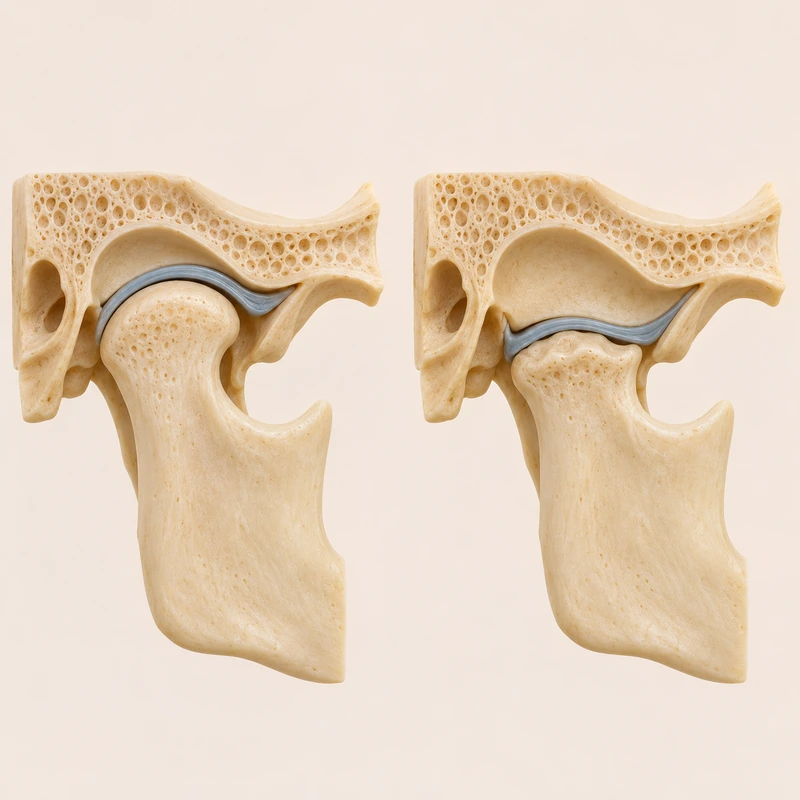
The condyle forms the joint-bearing head of the mandible. Bone loss here can reduce the height of the mandibular ramus and change the position of the lower jaw.
A newly open bite, changing tooth contacts or joint symptoms may prompt investigation. They do not prove resorption; examination, appropriate imaging and changes over time must be considered.
Treatment depends on whether bone loss is active or stable and on its cause. Symptoms, joint function and the bite are considered together; surgery is not automatically necessary.
The mandibular joint head.
Yes.
It is a classification after explanatory causes have been excluded.
Three steps. No audio.
Each scene can also be selected manually.

Silent educational film with German on-screen text and simplified teaching images. Not a patient case or a promised treatment outcome. The full English explanation is available as text.
Osteoarthritis involves degenerative joint changes. Condylar resorption describes loss of joint-head bone and has several possible causes. The terms may overlap but do not replace investigation of the cause.
No. Size and shape alone are insufficient. Earlier images, progression, clinical findings and possible underlying disease help interpretation.
No. A changing bite may be the main feature. New or progressive changes should be examined.
It depends on the question. Three-dimensional bone imaging may assess bony shape; MRI may help with soft-tissue or inflammatory questions. Imaging needs an individual indication.
During active resorption, the situation may keep changing. Cause and activity need assessment first; conservative care and any surgery are planned accordingly.
You can bring this question to your appointment:
What cause and level of activity do you suspect, and which follow-up findings are needed before correcting the bite?
An individual examination can clarify the findings and suitable next steps.
Arrange an assessmentAppointment selection at DoctolibOsteoarthritis involves degenerative joint changes. Condylar resorption describes loss of joint-head bone and has several possible causes. The terms may overlap but do not replace investigation of the cause.
Editorial research: . General information, not an individual diagnosis or treatment recommendation. Teaching illustrations are simplified and do not depict a patient case.
If you turn this on, this website stores which guides you open, separately from advertising preferences. The markers expire after a fixed 30-day period from activation. The list is not sent to us by this feature. You can turn it off here and delete the markers.
Other people using the same browser profile can also see the markers. German and English versions share one marker. Expired entries are removed the next time you open a page with this feature; deleting browser data may remove them earlier. “Viewed” means opened, not read or completed.