What may be noticed?
Food repeatedly traps or floss catches.

A proximal contact is the area where neighbouring tooth crowns touch. It is often a small surface rather than a mathematical point. Here the term concerns neighbours in the same jaw, not contacts between opposing teeth.
For training & practice ↓
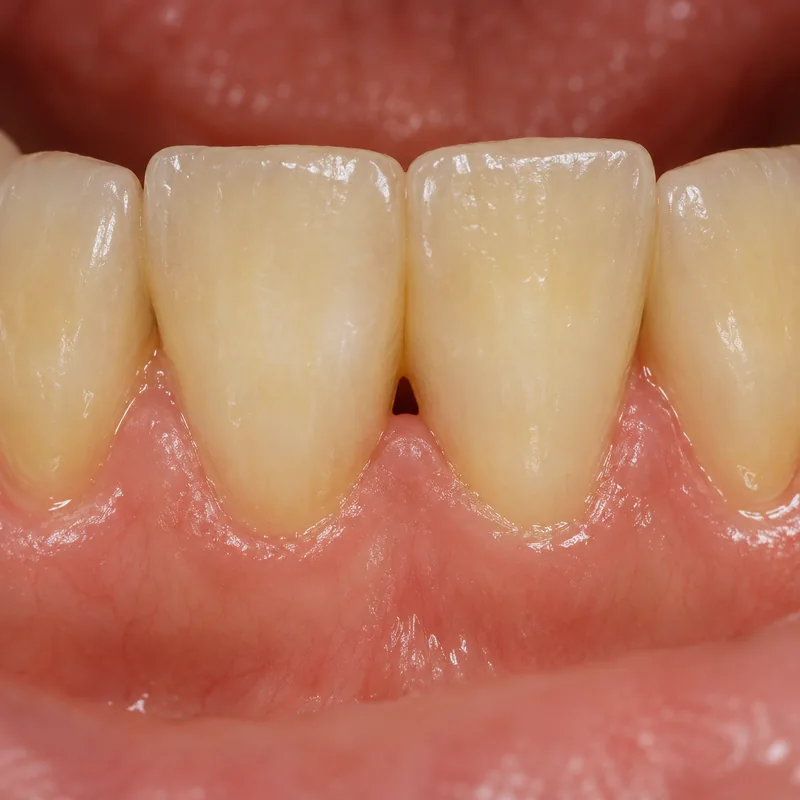
Tooth shape determines the contact location. Beneath it is the interdental region containing gum tissue and requiring cleaning.
An open or poorly shaped contact may contribute to trapped food. Tooth position, gum tissue and restoration contours also matter.
Repeated trapping, pain or repeatedly shredding floss needs assessment. Do not lever between teeth with sharp objects.
Food repeatedly traps or floss catches.
Have the contact and surrounding structures examined.
Do not file, lever or alter a restoration yourself.
Three steps. No audio.
Each scene can also be selected manually.

Silent educational film with German on-screen text and simplified teaching images. Not a patient case or a promised treatment outcome. The full English explanation is available below.
Tooth shape determines the contact location. Beneath it is the interdental region containing gum tissue and requiring cleaning.
An open or poorly shaped contact may contribute to trapped food. Tooth position, gum tissue and restoration contours also matter.
Repeated trapping, pain or repeatedly shredding floss needs assessment. Do not lever between teeth with sharp objects.
Proximal contacts are between crowns in the same arch. Biting contacts occur between upper and lower teeth.
No. Shape, location and cleaning access need to work together; tighter is not automatically better.
No. A restoration, tooth movement or tissue changes can also contribute.
Contact, restoration margins, gums and bite; additional imaging only when indicated.
An editorially suggested question for a discussion with Dr med dent Niusha Barahmand Pour:
Is the contact suitable, and what causes the repeated trapping?
The same area troubles you after meals? A focused check can assess the contact, filling and gums.
Have the contact checkedAppointment selection at DoctolibProximal contacts are between crowns in the same arch. Biting contacts occur between upper and lower teeth.
Editorial research: . General information, not an individual diagnosis or treatment recommendation. Teaching illustrations are simplified and do not depict a patient case.