Contact?
Cutting edge against cutting edge.

In an anterior edge-to-edge bite, the cutting edges of upper and lower incisors meet directly instead of overlapping slightly. In posterior terminology, a cusp-to-cusp relationship may also be described this way. The overall bite and any symptoms determine its relevance.
For training & practice ↓
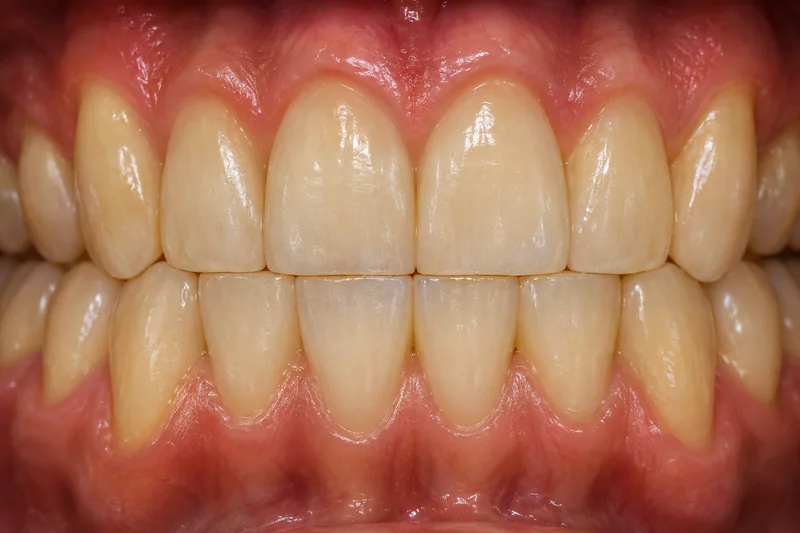
The incisor edges meet directly. This describes contact but does not establish the underlying dental or jaw relationship.
Assessment considers wear, contact distribution, function and growth. An edge-to-edge bite does not inevitably cause damage or jaw symptoms.
Observation or treatment depends on the individual situation. Contact appearance alone does not determine the appliance or timing.
Cutting edge against cutting edge.
No; the overall findings matter.
Consider contacts, wear and development together.
Three steps. No audio.
Each scene can also be selected manually.

Silent educational film with German on-screen text and simplified teaching images. Not a patient case or a promised treatment outcome. The full English explanation is available below.
The incisor edges meet directly. This describes contact but does not establish the underlying dental or jaw relationship.
Assessment considers wear, contact distribution, function and growth. An edge-to-edge bite does not inevitably cause damage or jaw symptoms.
Observation or treatment depends on the individual situation. Contact appearance alone does not determine the appliance or timing.
Edge-to-edge means direct cutting-edge contact. An anterior crossbite reverses the usual relationship; an open bite lacks contact in the affected area.
No. In an anterior crossbite, lower incisors lie in front of upper incisors; in an edge-to-edge bite their edges meet.
Not automatically. Tooth development, growth, severity and other findings influence assessment.
Tooth contacts may play a role, but wear has several possible contributing factors and needs its own assessment.
Editorially suggested question to discuss with Dr Niusha Barahmand Pour:
What does this edge contact mean for my teeth and the rest of my bite?
An examination can clarify edge-to-edge contacts or visible wear.
Have tooth contacts assessedAppointment selection at DoctolibEdge-to-edge means direct cutting-edge contact. An anterior crossbite reverses the usual relationship; an open bite lacks contact in the affected area.
Editorial research: . General information, not an individual diagnosis or treatment recommendation. Teaching illustrations are simplified and do not depict a patient case.