Where does it run?
On the tongue side behind the lower teeth.

A lingual arch is a wire appliance on the tongue side of the teeth. The commonly used lower lingual arch connects the molars and runs behind the lower incisors. It can help preserve existing space in the dental arch.
For training & practice ↓
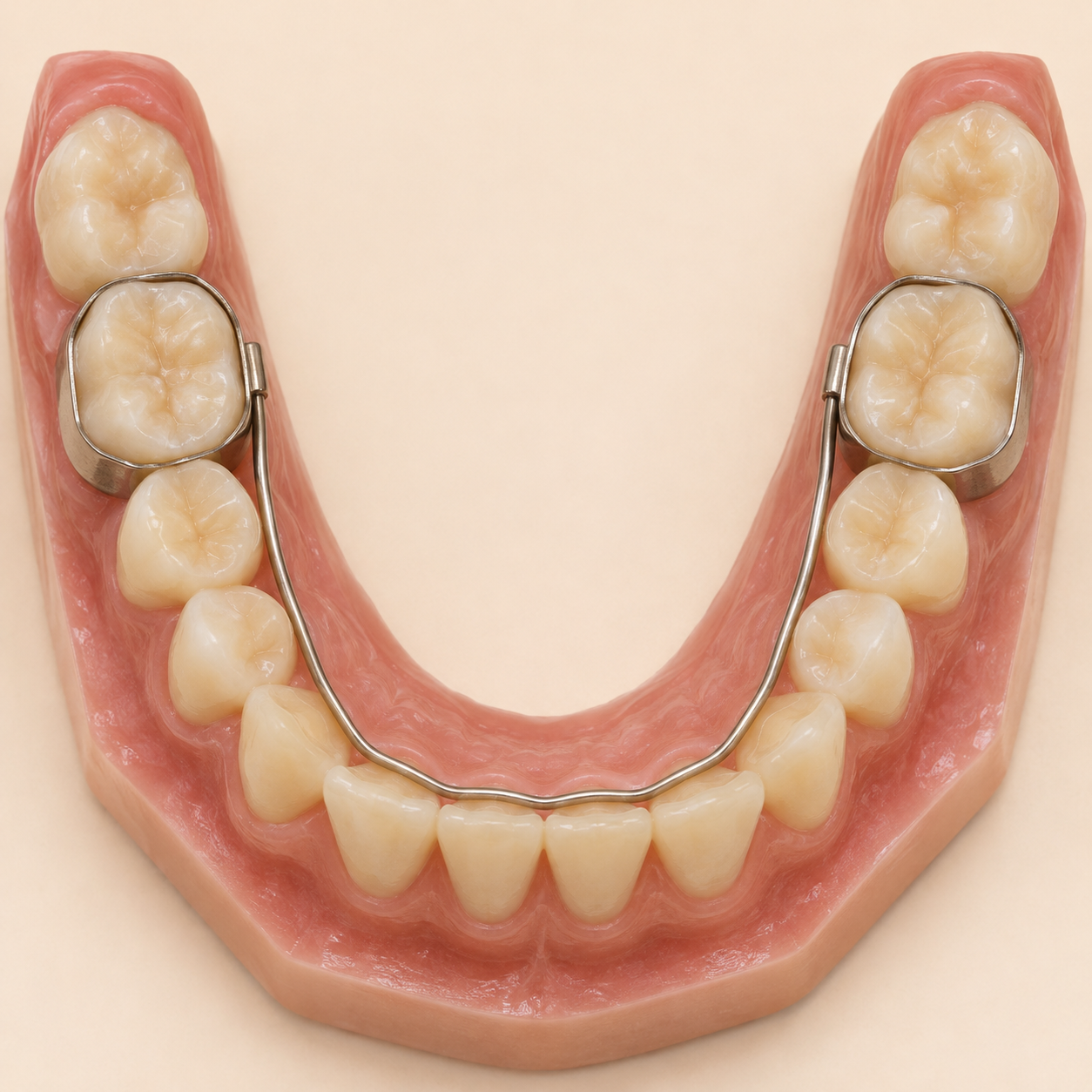
Molar bands support the arch. Its front section lies on the tongue side of the lower incisors; it is not a row of lingual brackets.
Space changes as permanent teeth replace primary teeth. A lingual arch can limit unwanted drifting. The need to hold space depends on eruption and the overall dental arch.
The appliance must not obstruct eruption. Review, thorough cleaning and checks for loose bands are necessary. Duration follows development rather than one fixed date.
On the tongue side behind the lower teeth.
Yes, including checks on eruption.
No.
Three steps. No audio.
Each scene can also be selected manually.

Silent educational film with German on-screen text and simplified teaching images. Not a patient case or a promised treatment outcome. The full English explanation is available as text.
Lingual only means the tongue side. A connecting arch and a bracket appliance have different designs and purposes.
No. Lingual braces have brackets on the inner tooth surfaces. A lingual arch is a different, usually simpler auxiliary appliance.
No. The timing of loss, available space and eruption of permanent teeth all matter.
No. Space maintenance may address one part of a problem, but it does not replace complete treatment planning.
You can bring this question to your appointment:
Which space needs preserving, and which teeth need room to erupt freely?
Discuss your individual findings and whether a referral is appropriate.
Discuss your findingsAppointment selection at DoctolibLingual only means the tongue side. A connecting arch and a bracket appliance have different designs and purposes.
Editorial research: . General information, not an individual diagnosis or treatment recommendation. Teaching illustrations are simplified and do not depict a patient case.