Definition?
Unusually large tooth size.

Macrodontia means a tooth is larger than usual. A tooth may also merely look large because neighbouring teeth are smaller or the arch offers little space. Measurement, shape and available space help distinguish these situations.
For training & practice ↓
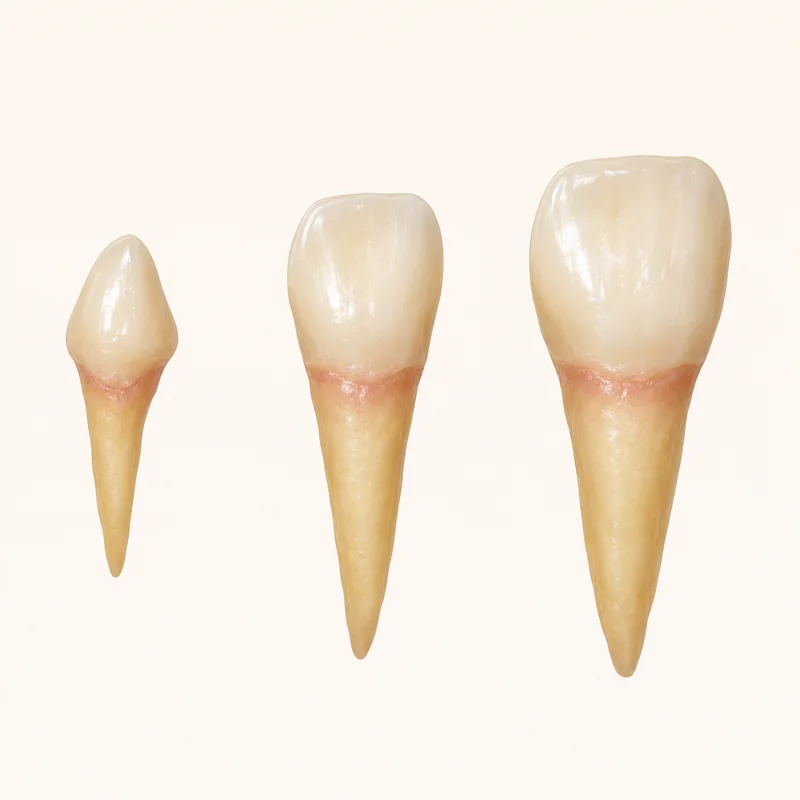
Assessment considers tooth type and the rest of the dentition. A photograph alone does not reliably establish size.
Fusion of developing teeth can also explain a broad crown. It is not the same as every case of true enlargement.
Cleanability, contacts and space matter. An unusual size does not automatically require cosmetic correction.
Unusually large tooth size.
A broad double crown may have a different cause.
Depends on function and findings.
Three steps. No audio.
Each scene can also be selected manually.

Silent educational film with German on-screen text and simplified teaching images. Not a patient case or a promised treatment outcome. The full English explanation is available as text.
Tooth size and available arch space are separate findings.
Not automatically. Shape, function and any symptoms are assessed.
Not without planning. Uncontrolled reduction can damage tooth tissue and the pulp.
That depends on space and bite; the term alone does not determine treatment.
Editorially suggested question to discuss with Dr Niusha Barahmand Pour:
Is the tooth truly enlarged or does it only look large in proportion?
If tooth shape affects cleaning, biting or your smile, assessment can clarify the proportions and options.
Discuss tooth proportionsAppointment selection at DoctolibTooth size and available arch space are separate findings.
Editorial research: . General information, not an individual diagnosis or treatment recommendation. Teaching illustrations are simplified and do not depict a patient case.