What information can help identify the cause?
A full medication list and symptom timeline help the assessment.

Medication-related dry mouth is a dry feeling to which medicines may contribute. Some reduce the saliva needed for speech, swallowing and tooth protection.
For training & practice ↓
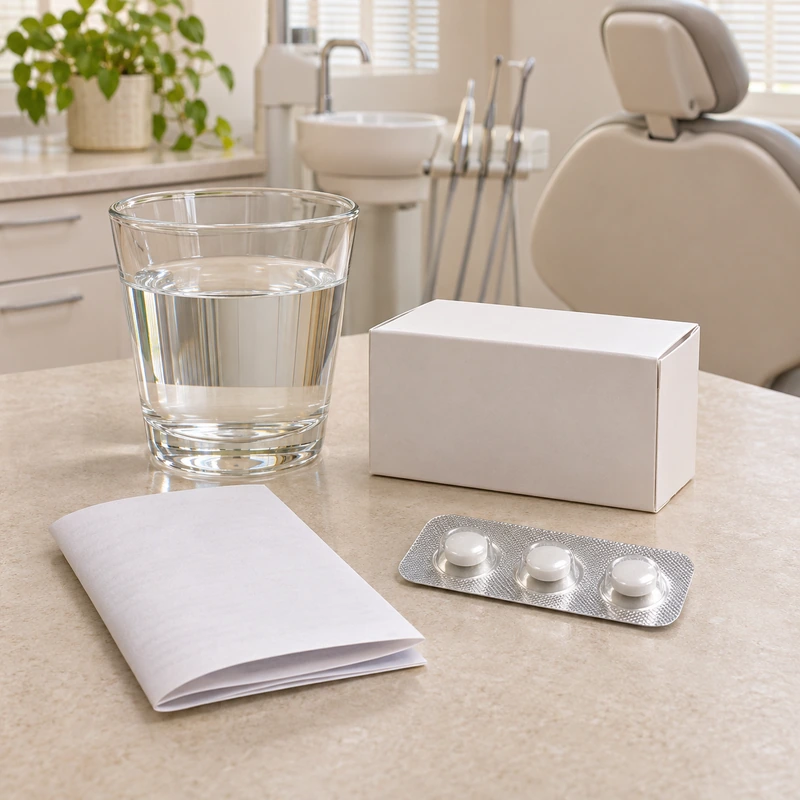
List prescription and over-the-counter medicines and record when the dryness began. A change after a dose adjustment is a clue, but timing alone does not prove the cause.
Discuss changes with the prescribing clinician. Do not stop a medicine on your own because of dry mouth. Your dental team can assess your mouth and risk of decay.
Small sips of water may help unless you have a medical fluid restriction. Brush with fluoride toothpaste and avoid frequent sips of sugary drinks.
A full medication list and symptom timeline help the assessment.
Discuss prescription changes with the prescribing clinician.
Water within your fluid plan and fluoride toothpaste support daily care.
Three steps. No audio.
Each scene can also be selected manually.

Silent educational film with German on-screen text and simplified teaching images. Not a patient case or a promised treatment outcome. The full English explanation is available as text.
Other causes include certain illnesses and radiation to the head and neck. Persistent symptoms deserve assessment even if your medicines have been unchanged for a long time.
List prescription and over-the-counter medicines and record when the dryness began. A change after a dose adjustment is a clue, but timing alone does not prove the cause.
Discuss changes with the prescribing clinician. Do not stop a medicine on your own because of dry mouth. Your dental team can assess your mouth and risk of decay.
Small sips of water may help unless you have a medical fluid restriction. Brush with fluoride toothpaste and avoid frequent sips of sugary drinks.
Some medicines for high blood pressure, depression or bladder problems can cause dry mouth. Whether a particular product is involved requires individual assessment.
Other causes include certain illnesses and radiation to the head and neck. Persistent symptoms deserve assessment even if your medicines have been unchanged for a long time.
A question you could ask
Which of my medicines might contribute and how can we protect my teeth?
Bring your medication list to an appointment for persistent dry mouth.
Discuss at a dental appointmentAppointment selection at DoctolibOther causes include certain illnesses and radiation to the head and neck. Persistent symptoms deserve assessment even if your medicines have been unchanged for a long time.
Editorial research: . General information, not an individual diagnosis or treatment recommendation. Teaching illustrations are simplified and do not depict a patient case.
If you turn this on, this website stores which guides you open, separately from advertising preferences. The markers expire after a fixed 30-day period from activation. The list is not sent to us by this feature. You can turn it off here and delete the markers.
Other people using the same browser profile can also see the markers. German and English versions share one marker. Expired entries are removed the next time you open a page with this feature; deleting browser data may remove them earlier. “Viewed” means opened, not read or completed.