What is small?
The crown relative to its usual tooth type.

Microdontia means unusually small tooth size. A small or narrow upper lateral incisor may be particularly noticeable. Assessment distinguishes a genuinely small crown from a tooth that only looks small relative to the arch.
For training & practice ↓
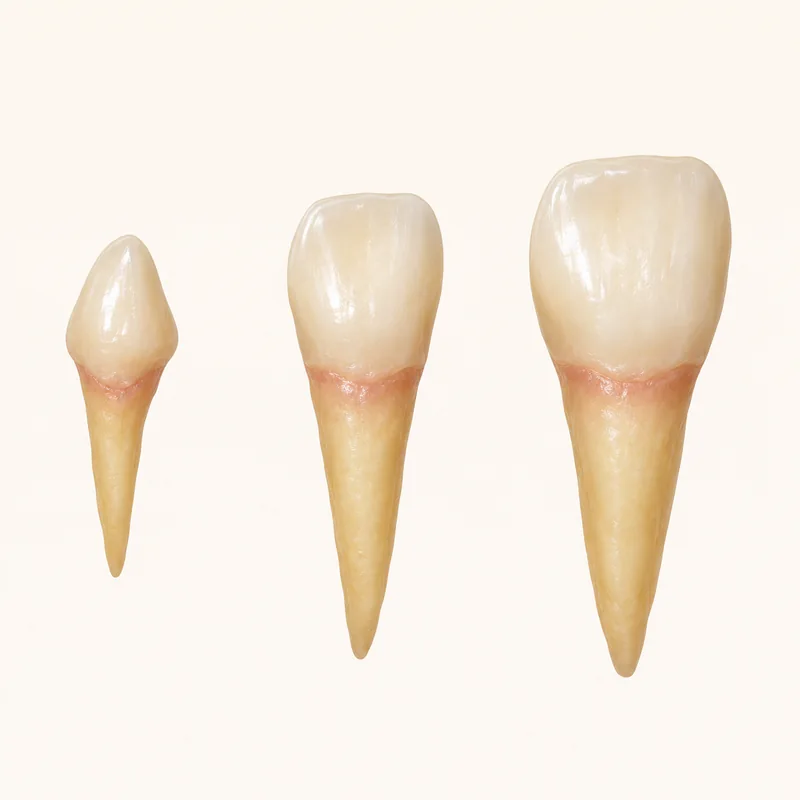
A small tooth may have ordinary proportions or also be peg-shaped. Not every shape difference is the same developmental variation.
Small crowns can contribute to gaps. Missing teeth, tooth position and arch shape are also considered.
Correction is not automatically needed. If desired, tooth tissue, bite, age and possible treatments are discussed together.
The crown relative to its usual tooth type.
No; function and preference matter.
Assess bite, tissue and space together.
Three steps. No audio.
Each scene can also be selected manually.

Silent educational film with German on-screen text and simplified teaching images. Not a patient case or a promised treatment outcome. The full English explanation is available as text.
Microdontia describes tooth size. Hypodontia describes missing developing teeth.
Not automatically. Size alone says little about decay or strength.
No. Whether and how to change it depends on findings and preferences.
No. Tooth measurements and the whole dentition need assessment.
Editorially suggested question to discuss with Dr Niusha Barahmand Pour:
How do size, bite and tooth tissue affect possible correction?
If a small tooth or gap bothers you, the options can be discussed before choosing any treatment.
Discuss tooth shape and a gapAppointment selection at DoctolibMicrodontia describes tooth size. Hypodontia describes missing developing teeth.
Editorial research: . General information, not an individual diagnosis or treatment recommendation. Teaching illustrations are simplified and do not depict a patient case.