Teeth only?
Also gums, oral tissues and dentures.

An oral care assessment reviews the current state of oral hygiene. In the German dental care programme, the formal term is Mundgesundheitsstatus: teeth, gums, oral tissues and dentures are assessed. Together with the person’s abilities and needs, these findings inform an individual oral health plan.
For training & practice ↓
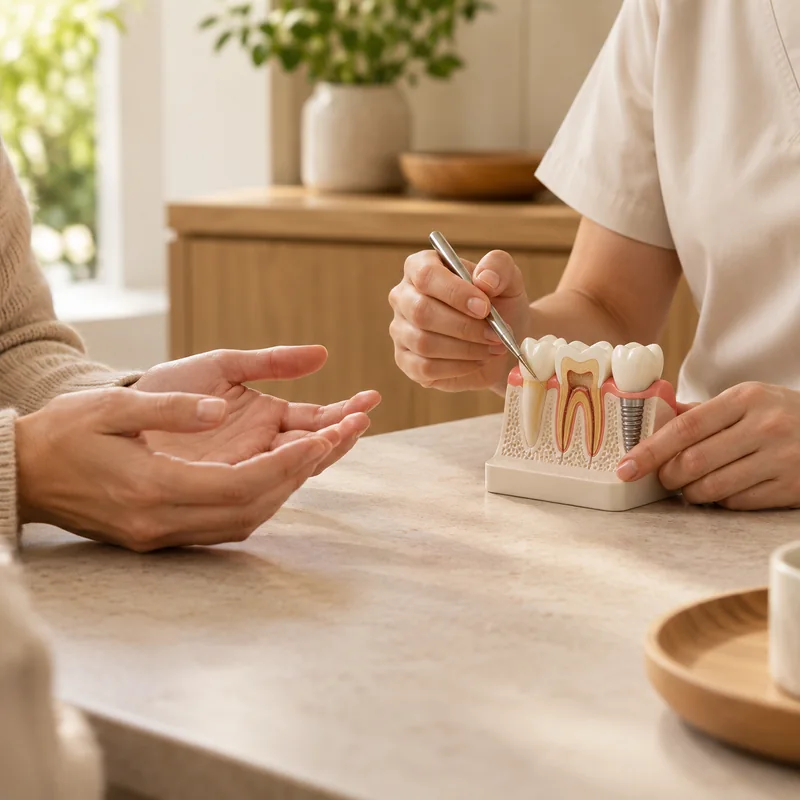
Teeth are only part of the picture: gums, oral tissues and any dentures also matter. Report symptoms and difficulties with everyday care.
Which care is recommended, how often and with what assistance? The plan should make specific tasks understandable.
What works and what remains difficult? This feedback helps adapt advice at the next dental review.
Also gums, oral tissues and dentures.
No.
Give feedback and seek assessment when needed.
Three steps. No audio.
Each scene can also be selected manually.

Silent educational film with German on-screen text and simplified teaching images. Not a patient case or a promised treatment outcome. The full English explanation is available as text.
Assessment describes the current situation. The individual oral health plan records what this means for daily care.
No. Assessment should identify useful support, not shame someone or assign blame.
No. Assessment describes the starting point; the plan sets out resulting care measures and support.
Yes. Oral tissues and any dentures still need attention. Having no natural teeth does not remove the need for oral care.
Yes, for example about tasks that are difficult. Keep the person involved and agree with them how others will participate.
No. New pain or sore spots need specific assessment. An older care plan does not diagnose current symptoms.
You can bring this question to your appointment:
Which tasks follow from my oral health assessment, and who can support me with them?
Bring specific questions about daily oral care and any existing plan to the discussion.
Discuss dental careAppointment selection at DoctolibAssessment describes the current situation. The individual oral health plan records what this means for daily care.
Editorial research: . General information, not an individual diagnosis or treatment recommendation. Teaching illustrations are simplified and do not depict a patient case.
If you turn this on, this website stores which guides you open, separately from advertising preferences. The markers expire after a fixed 30-day period from activation. The list is not sent to us by this feature. You can turn it off here and delete the markers.
Other people using the same browser profile can also see the markers. German and English versions share one marker. Expired entries are removed the next time you open a page with this feature; deleting browser data may remove them earlier. “Viewed” means opened, not read or completed.