What for?
To help prevent decay as part of suitable oral care.

Sodium fluoride is a fluoride compound used in products including toothpaste. Available fluoride supports mineral replacement in enamel and helps prevent tooth decay. The ingredient name alone is not decisive: fluoride concentration, regular use and an appropriate amount also matter.
For training & practice ↓
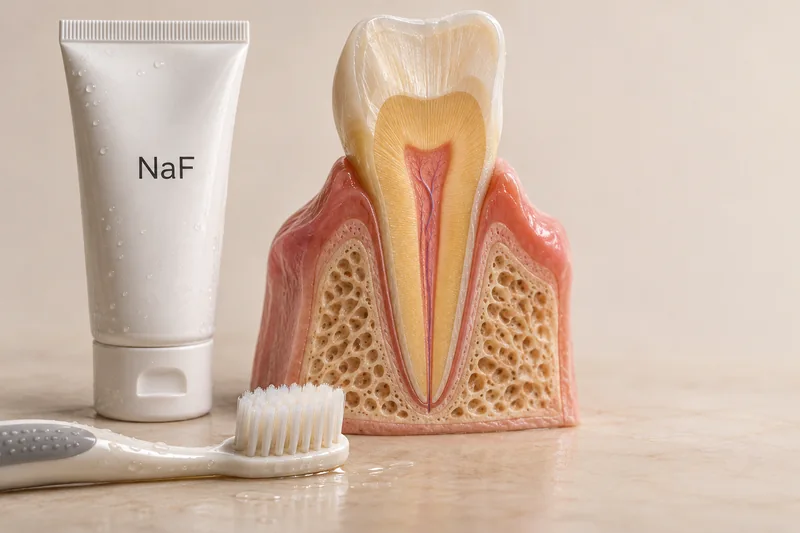
A label may list sodium fluoride or NaF. The ppm figure describes the fluoride concentration. The ingredient name alone does not tell you how much fluoride a product contains.
Fluoride works mainly through its interaction with the tooth surface, saliva and plaque. It supports enamel mineral balance; it does not simply fill a larger established cavity.
Fluoride toothpaste is part of regular oral care. Amount and concentration need to suit age. Other fluoride sources should be considered for children; do not add tablets or high-strength products on your own.
To help prevent decay as part of suitable oral care.
No. Amount and concentration need to be appropriate.
No. Fluoride and mechanical cleaning complement each other.
Three steps. No audio.
Each scene can also be selected manually.

Silent educational film with German on-screen text and simplified teaching images. Not a patient case or a promised treatment outcome. The full English explanation is available as text.
Sodium fluoride names a compound; ppm describes a concentration. Two products with the same ingredient can therefore supply different amounts of fluoride.
The name of a fluoride compound does not establish universal superiority for preventing decay. Concentration and regular, appropriate use are important.
No. Fluorine is the chemical element; sodium fluoride contains fluoride as part of a chemical compound. The terms should not be treated as interchangeable.
No. Especially for children, toothpaste, possible supplements and other fluoride sources need to be considered together. Discuss suitable use with a dental or paediatric practice.
Toothpaste is intended for brushing, not eating. Adults spit it out after brushing. Immediately rinsing thoroughly with water removes some of the remaining fluoride; age-appropriate advice applies to children.
You can bring this question to your appointment:
Which fluoride toothpaste and amount suit my age and risk of decay?
At a preventive appointment, we can discuss your oral care and the fluoride products you use.
Arrange an assessmentAppointment selection at DoctolibSodium fluoride names a compound; ppm describes a concentration. Two products with the same ingredient can therefore supply different amounts of fluoride.
Editorial research: . General information, not an individual diagnosis or treatment recommendation. Teaching illustrations are simplified and do not depict a patient case.