What is divided?
The tooth, for example its crown or separate root portions.

Tooth sectioning, also called odontotomy, deliberately divides a tooth into sections during surgical removal. The crown and roots, or individual roots, can then be removed separately. Whether this helps depends on tooth position, shape and nearby structures.
For training & practice ↓
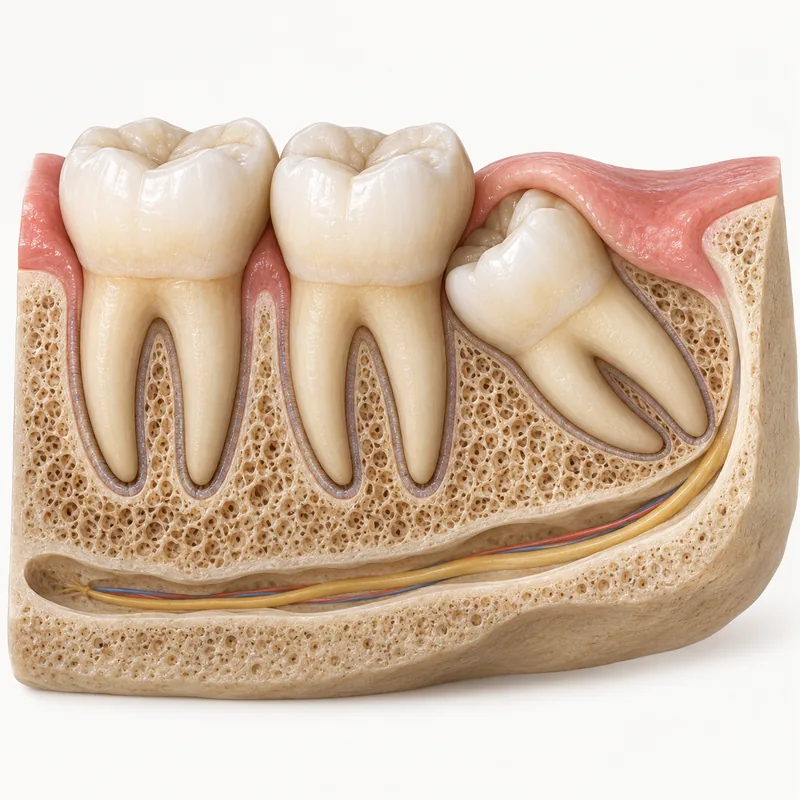
A tooth may be angled, largely enclosed in bone or have several roots with different paths. Planning considers both the tooth and its surroundings.
Under anaesthesia, suitable instruments are used to divide the tooth into planned sections. This is an intended surgical step, not an accidental break.
The sections are removed according to the plan and the wound is cared for. Sectioning does not replace assessment or careful aftercare.
The tooth, for example its crown or separate root portions.
Selected surgical removals following assessment and planning.
Wound care and aftercare tailored to the operation.
Three steps. No audio.
Each scene can also be selected manually.

Silent educational film with German on-screen text and simplified teaching images. Not a patient case or a promised treatment outcome. The full English explanation is available as text.
Odontotomy is deliberate division during an operation. An unplanned tooth or root fracture is different.
No. Other difficult-to-remove teeth, including teeth with several roots or extensive damage, may also benefit from sectioning.
Not necessarily. Dividing the tooth and making bone access are different steps. Some operations combine them.
Sectioning usually helps complete the planned removal. Intentionally retaining root portions is a separate decision that requires its own explanation and discussion.
You can bring this question to your appointment:
Why is sectioning planned, and which parts of my tooth will be removed?
Before surgical removal, ask for a clear explanation of any planned tooth sectioning and aftercare.
Discuss your findingsAppointment selection at DoctolibOdontotomy is deliberate division during an operation. An unplanned tooth or root fracture is different.
Editorial research: . General information, not an individual diagnosis or treatment recommendation. Teaching illustrations are simplified and do not depict a patient case.