What does the term mean?
The community of microorganisms in the mouth and their interactions.

The oral microbiome is the community of microorganisms in the mouth, including bacteria and fungi. Many belong in a healthy mouth; their interactions and local conditions matter.
For dental trainees & teams
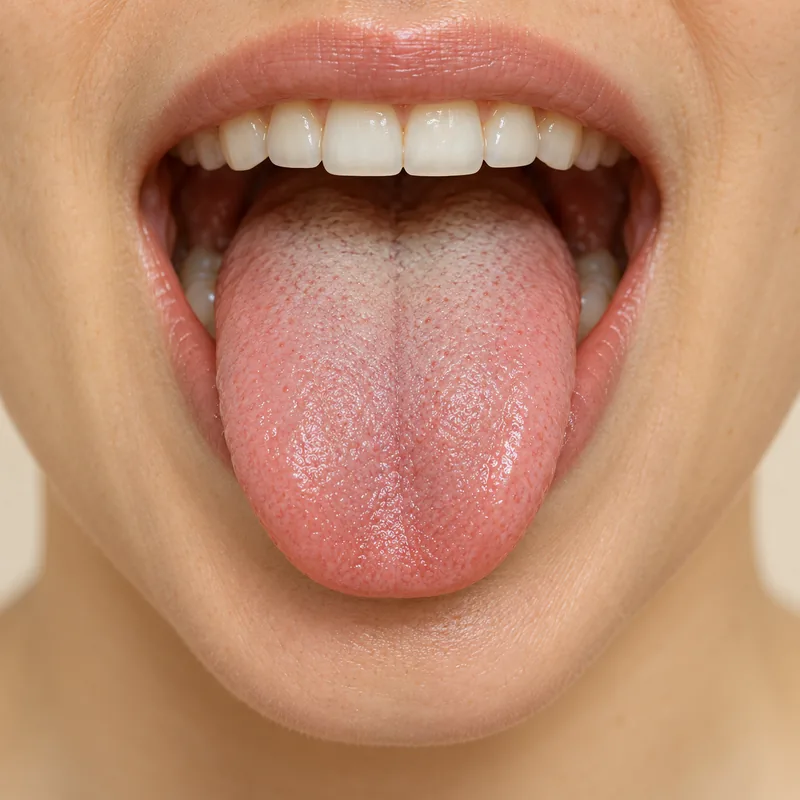
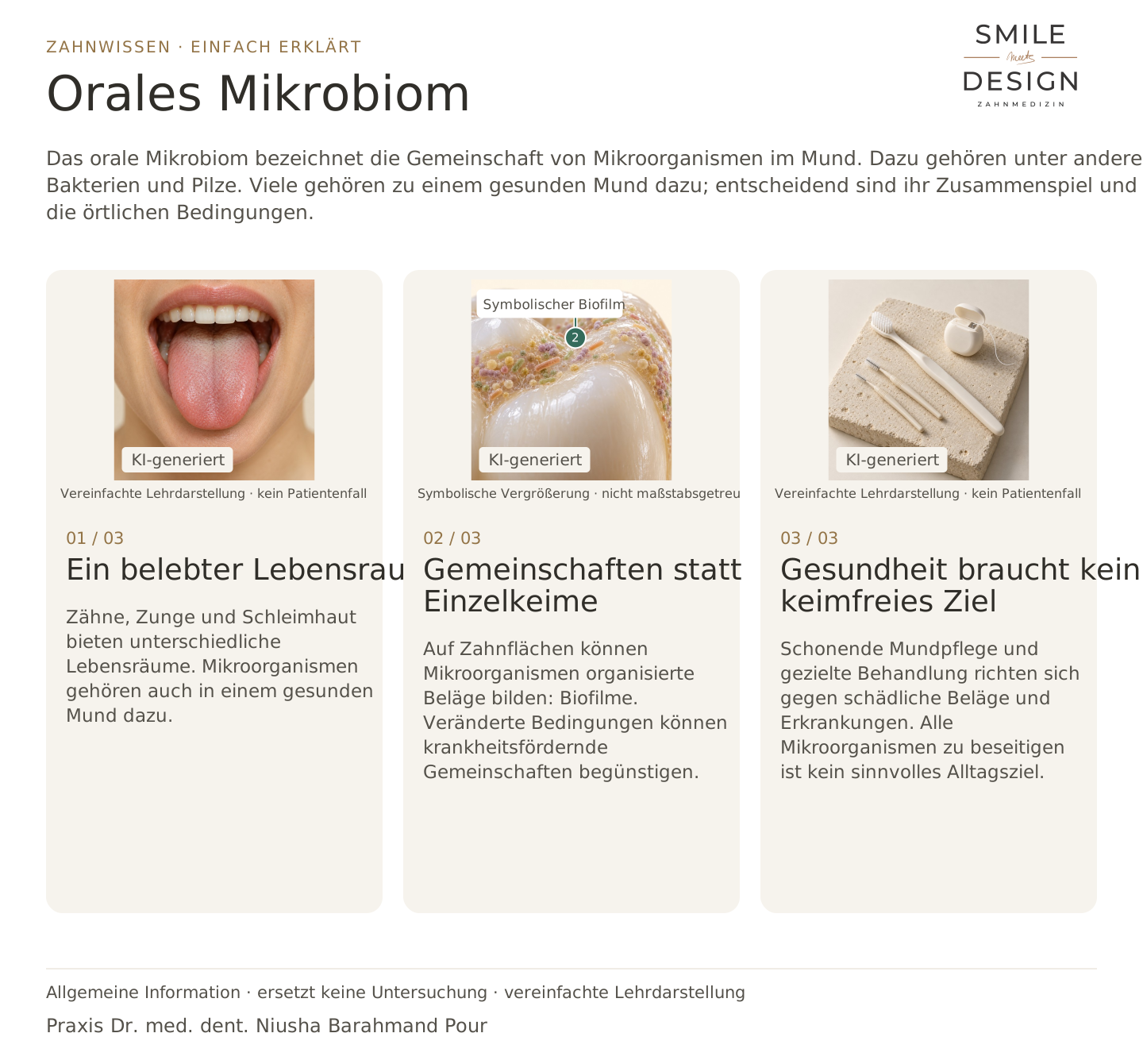
Teeth, the tongue and oral lining provide different habitats. Microorganisms also belong in a healthy mouth.
Microorganisms can form organised deposits on teeth: biofilms. Changing conditions can favour communities associated with disease.
Gentle oral care and targeted treatment address harmful deposits and disease. Removing all microorganisms is not a useful everyday goal.
The community of microorganisms in the mouth and their interactions.
On tooth surfaces, the tongue and oral lining, among other distinct habitats.
A healthy mouth is not germ-free. Conditions and microbial interactions can favour health or disease.
Three steps. Straight to the point.
Explanations are also shown on screen.

Silent film in German · English explanations in the three views above
The microbiome describes the community; a biofilm describes an organised way of living on a surface. Plaque is one example.
No. The microbiome includes the mouth's microbial community; plaque is a biofilm on tooth surfaces.
No. Many are normal inhabitants. Their effects also depend on their environment and interactions.
Products advertised to 'optimise the microbiome' cannot be assumed to help everyone. Symptoms and oral care should be discussed individually.
A question to discuss with Dr. med. dent. Niusha Barahmand Pour:
How do deposits, saliva and my oral care affect the health of my teeth and gums?
Healthy structures are a foundation of individual treatment planning.
Oral-care questions can be considered in the context of your own situation.
Discuss oral healthChoose an appointment on DoctolibBuild on the simple explanation with clinical terms, key distinctions and a knowledge question.
The microbiome refers to the community in a habitat; plaque is a particular biofilm on teeth.
Editorial research: 23 October 2026. This explanation covers general principles and does not replace a personal examination. Suitable treatment is discussed following individual assessment.