Where does it commonly occur?
The lips, although other oral tissues may be affected.

Orofacial granulomatosis is an uncommon inflammatory condition involving recurrent or persistent swelling around the mouth and face, often affecting the lips. Granulomas may form in the tissue. In the idiopathic form, no other underlying condition explains the findings; Crohn’s disease, sarcoidosis and certain infections must be considered and excluded where appropriate.
For training & practice ↓
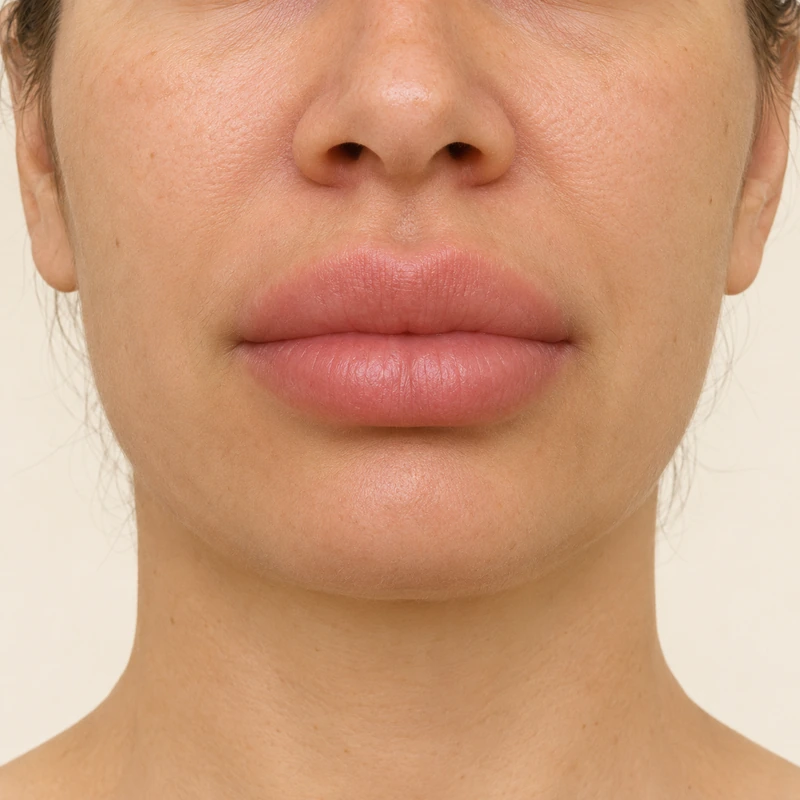
Lip swelling may initially come and go and later persist. The oral lining and gums may also be affected. Appearance and course alone do not establish the cause.
A biopsy may show granulomatous inflammation. It is interpreted with other investigations because similar tissue changes occur in other conditions.
Treatment depends on symptoms and findings. Report new bowel symptoms or other general symptoms; the diagnosis may need to be reassessed over time.
The lips, although other oral tissues may be affected.
No. Further investigation may be needed.
Findings and accompanying symptoms may change.
Three steps. No audio.
Each scene can also be selected manually.

Silent educational film with German on-screen text and simplified teaching images. Not a patient case or a promised treatment outcome. The full English explanation is available as text.
A granuloma is a particular collection of inflammatory cells. Granulation tissue forms during processes such as wound healing. These similar-sounding terms are not equivalent.
No. Irritation, infection, angioedema and other causes are possible. Sudden swelling with breathing or circulatory symptoms is an emergency: call 112 in Germany.
No. Crohn’s disease can produce similar tissue changes, but the full assessment determines the diagnosis. In idiopathic disease, such a cause is not initially identified.
Do not start a broad exclusion diet without professional support. Possible triggers are assessed specifically; the term does not establish a food allergy.
You can bring this question to your appointment:
Which causes have been assessed, and which new symptoms should I report during follow-up?
An individual examination can clarify the findings and suitable next steps.
Arrange an assessmentAppointment selection at DoctolibA granuloma is a particular collection of inflammatory cells. Granulation tissue forms during processes such as wound healing. These similar-sounding terms are not equivalent.
Editorial research: . General information, not an individual diagnosis or treatment recommendation. Teaching illustrations are simplified and do not depict a patient case.
If you turn this on, this website stores which guides you open, separately from advertising preferences. The markers expire after a fixed 30-day period from activation. The list is not sent to us by this feature. You can turn it off here and delete the markers.
Other people using the same browser profile can also see the markers. German and English versions share one marker. Expired entries are removed the next time you open a page with this feature; deleting browser data may remove them earlier. “Viewed” means opened, not read or completed.