Possible aim?
Make tooth structure accessible for restoration.

Orthodontic extrusion moves a tooth in a controlled way outwards from its socket towards the biting surface. In selected cases this can make more tooth structure accessible for restoration. A tooth displaced outwards by an accident is an acute injury instead.
For training & practice ↓
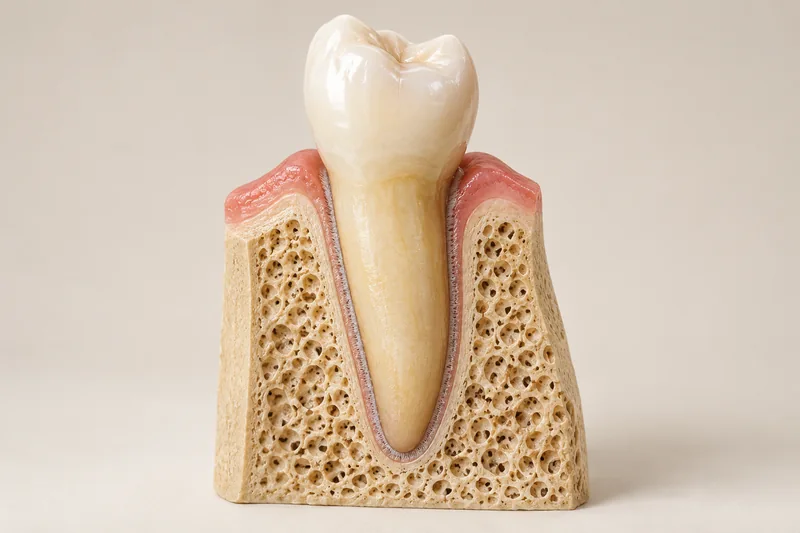
Planned forces change the position. The tooth is not simply pulled out and reinserted.
With a deep defect, extrusion can be a possible step before restoration. Enough supporting root must remain.
Gums and bone may respond differently. The procedure and subsequent stabilisation depend on the treatment goal.
Make tooth structure accessible for restoration.
Suitable root and tissue findings.
Prompt urgent examination rather than waiting.
Three steps. No audio.
Each scene can also be selected manually.

Silent educational film with German on-screen text and simplified teaching images. Not a patient case or a promised treatment outcome. The full English explanation is available as text.
The same direction term must not make a traumatic displacement seem like planned treatment.
No. In extrusion the tooth remains within its supporting tissues; extraction removes it.
No. The root, fracture pattern and restorability limit the options.
No. Seek prompt dental assessment and do not push it back yourself.
Editorially suggested question to discuss with Dr Niusha Barahmand Pour:
What conditions would need to be met for extrusion?
For a deep defect, discuss the limits of tooth preservation. After an accident, use an urgent dental contact route.
Discuss tooth preservationAppointment selection at DoctolibThe same direction term must not make a traumatic displacement seem like planned treatment.
Editorial research: . General information, not an individual diagnosis or treatment recommendation. Teaching illustrations are simplified and do not depict a patient case.