Aim?
A directed position change when appropriate.

Orthodontic intrusion is planned movement of a tooth further into its socket. It can form part of treatment for selected deep bites. Roots, supporting tissues and force control set limits. A tooth pushed in by an accident requires immediate assessment instead.
For training & practice ↓
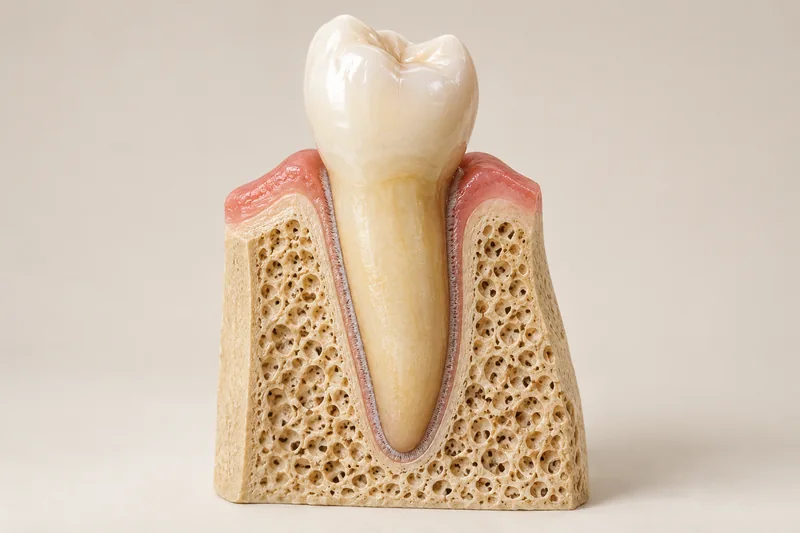
Movement follows a planned axis. This differs from simply tipping the tooth.
Treatment needs controlled forces and suitable anchorage. More pressure does not automatically mean better movement.
Inflammation and previous damage must be considered. Reviews also monitor unwanted changes to the roots.
Movement follows a planned axis. This differs from simply tipping the tooth.
Treatment needs controlled forces and suitable anchorage. More pressure does not automatically mean better movement.
Inflammation and previous damage must be considered. Reviews also monitor unwanted changes to the roots.
A directed position change when appropriate.
Roots and supporting tissues.
Immediate assessment; no self-correction.
Three steps. No audio.
Each scene can also be selected manually.

Silent educational film with German on-screen text and simplified teaching images. Not a patient case or a promised treatment outcome. The full English explanation is available as text.
A changed tooth position and lost tooth tissue are different findings.
No. Deep bites have different causes; examination determines the appropriate movement.
Intrusion describes a change of position, not shortening by grinding.
Seek immediate dental assessment. Do not pull it out yourself; management depends partly on tooth type and root development.
Editorially suggested question to discuss with Dr Niusha Barahmand Pour:
Which tooth movement is appropriate for my bite and how is it monitored?
With a deep bite, the cause and tissue limits matter more than one movement term.
Discuss bite and tooth preservationAppointment selection at DoctolibA changed tooth position and lost tooth tissue are different findings.
Editorial research: . General information, not an individual diagnosis or treatment recommendation. Teaching illustrations are simplified and do not depict a patient case.