Where are they found?
On the outer enamel surface.

Perikymata are fine, wave-like grooves and ridges on the natural enamel surface. They mark where certain internal enamel growth lines reach the outside of the tooth. Their visibility varies, and wear can make them less distinct. Perikymata alone do not establish decay or an enamel-development defect.
For training & practice ↓
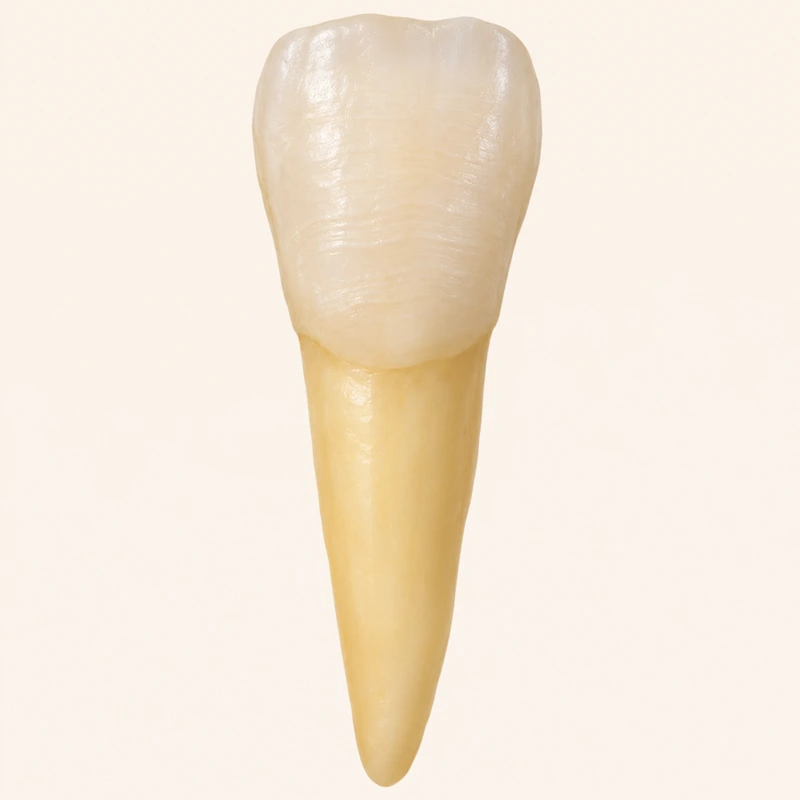
Enamel forms in growth increments. Where certain internal growth lines reach the surface, fine horizontal grooves and ridges appear. These surface features are called perikymata.
The texture varies in visibility with the tooth and lighting. Wear can reduce it. A smoother surface therefore does not prove that the tooth originally developed differently.
Pronounced grooves, tissue loss or new changes need to be distinguished from normal texture. This requires examination; a photograph or a single line is not enough.
On the outer enamel surface.
Wear is one possible reason.
Healthy texture alone does not.
Three steps. No audio.
Each scene can also be selected manually.

Silent educational film with German on-screen text and simplified teaching images. Not a patient case or a promised treatment outcome. The full English explanation is available as text.
Perikymata are part of normal surface structure. Hypoplasia means insufficient enamel formation and may produce more pronounced grooves or other defects. They are not the same finding.
No. Perikymata follow the natural growth texture of the surface. A crack is a discontinuity in tooth structure and needs a different assessment.
Not every horizontal line is a perikyma. Developmental defects or later changes may look similar. An unexplained or changing area should be examined.
Healthy natural texture does not need removal. Unnecessary smoothing removes tooth tissue. Any treatment should address a specific finding.
You can bring this question to your appointment:
Is this normal enamel texture or an actual tissue defect that needs monitoring or treatment?
An individual assessment can clarify the findings and whether referral is needed.
Arrange an assessmentAppointment selection at DoctolibPerikymata are part of normal surface structure. Hypoplasia means insufficient enamel formation and may produce more pronounced grooves or other defects. They are not the same finding.
Editorial research: . General information, not an individual diagnosis or treatment recommendation. Teaching illustrations are simplified and do not depict a patient case.
If you turn this on, this website stores which guides you open, separately from advertising preferences. The markers expire after a fixed 30-day period from activation. The list is not sent to us by this feature. You can turn it off here and delete the markers.
Other people using the same browser profile can also see the markers. German and English versions share one marker. Expired entries are removed the next time you open a page with this feature; deleting browser data may remove them earlier. “Viewed” means opened, not read or completed.