Is a space maintainer enough?
It preserves existing space. Lost space may require active movement.

After early loss of a primary tooth, neighbouring teeth may drift into the space. Space regaining uses controlled tooth movement to recreate room for a permanent tooth. Suitability depends on space throughout the arch and the stage of dental development.
For training & practice ↓
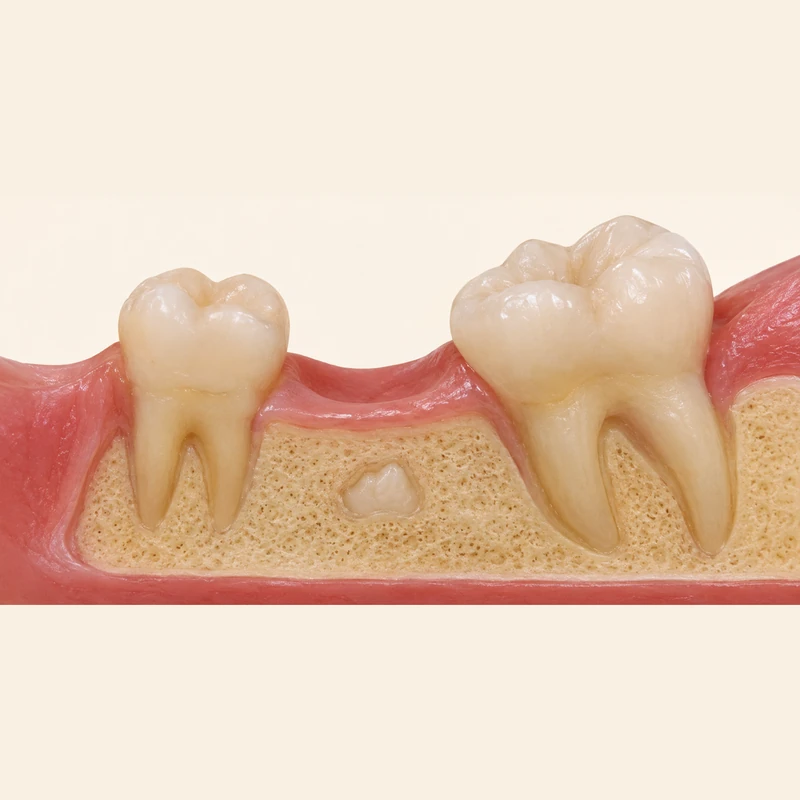
A neighbouring tooth may drift or tip into the vacant space, leaving too little width for the permanent successor.
Position, development and estimated tooth width are compared with the available space. An X-ray may help answer a specific question.
An appropriate appliance guides tooth movement. Once room has been regained, it may need to be held until the permanent tooth erupts.
It preserves existing space. Lost space may require active movement.
The developmental stage and individual space balance guide the decision.
The space is monitored until eruption.
Three steps. No audio.
Each scene can also be selected manually.

Silent film with English on-screen text and simplified teaching images.
General crowding means insufficient room in the arch. Local loss of space after premature tooth loss raises a separate planning question.
Opening space at one site affects neighbouring teeth. Other permanent teeth also need room.
Casts, a scan and X-rays when indicated can supplement examination.
Appliance fit, tooth movement, cleaning and development of the expected tooth.
Mention when the primary tooth was lost and whether earlier images are available.
How much room is missing and how will it be held afterwards?
Paediatric dental or orthodontic assessment can distinguish observation, maintenance and active movement.
Choose an appointmentAppointment selection at DoctolibRegaining space for a tooth requires a movement that fits the treatment plan for the whole dentition.
Editorial research: . General information, not an individual diagnosis or treatment recommendation. Teaching illustrations are simplified and do not depict a patient case.
If you turn this on, this website stores which guides you open, separately from advertising preferences. The markers expire after a fixed 30-day period from activation. The list is not sent to us by this feature. You can turn it off here and delete the markers.
Other people using the same browser profile can also see the markers. German and English versions share one marker. Expired entries are removed the next time you open a page with this feature; deleting browser data may remove them earlier. “Viewed” means opened, not read or completed.