Why apply heat?
To change the handling and formability of gutta-percha.

Thermoplastic gutta-percha is root filling material softened by heat. It can be placed and adapted to a prepared canal, usually with a sealer. The technique is one option for root filling; it does not replace the preceding cleaning and disinfection.
For training & practice ↓
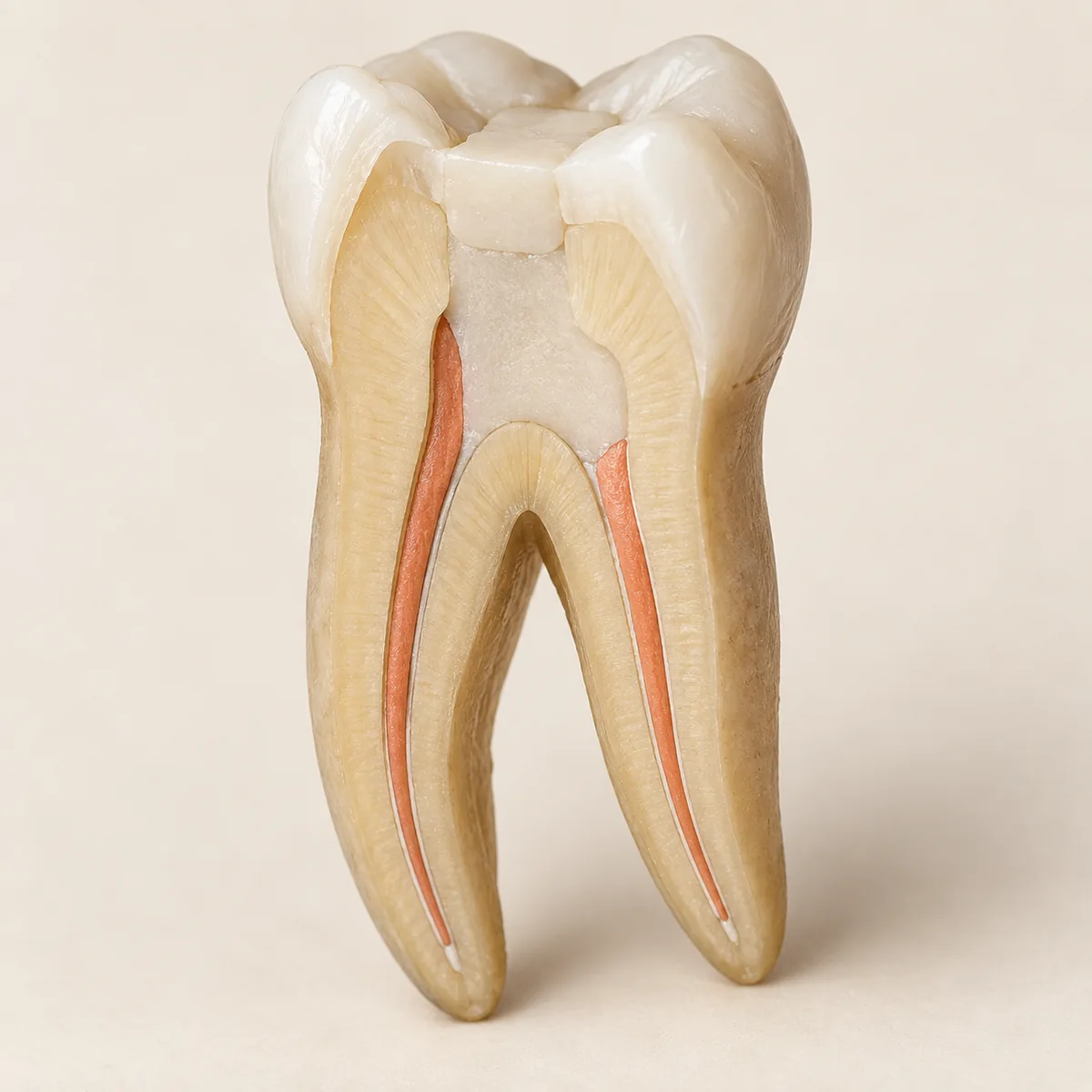
Warming makes gutta-percha softer. It can adapt to irregular canal areas, although every small side branch cannot be predictably filled.
Working length and root shape guide placement. Material should remain within the intended canal space; extrusion beyond the tip is not a quality marker.
The root filling, coronal seal and follow-up all matter. No filling technique guarantees better healing for every tooth.
To change the handling and formability of gutta-percha.
No. Preparation and cleaning come first.
No. The technique is chosen to suit the tooth.
Three steps. No audio.
Each scene can also be selected manually.

Silent educational film with German on-screen text and simplified teaching images. Not a patient case or a promised treatment outcome. The full English explanation is available as text.
Gutta-percha is the core material. Thermoplastic describes processing it after heat softening. A sealer is an additional sealing material, not another name for gutta-percha.
Not universally. Anatomy, the material system and correct technique guide selection. The method’s name alone does not predict success.
The filling method does not replace controlled disinfection. Appropriate preparation and cleaning take place before filling.
It complements the core material at interfaces. Its properties and use must be suitable for the selected filling technique.
You can bring this question to your appointment:
Why does this filling technique suit my canal anatomy, and how will the outcome be checked?
An individual examination can clarify the findings and suitable next steps.
Arrange an assessmentAppointment selection at DoctolibGutta-percha is the core material. Thermoplastic describes processing it after heat softening. A sealer is an additional sealing material, not another name for gutta-percha.
Editorial research: . General information, not an individual diagnosis or treatment recommendation. Teaching illustrations are simplified and do not depict a patient case.
If you turn this on, this website stores which guides you open, separately from advertising preferences. The markers expire after a fixed 30-day period from activation. The list is not sent to us by this feature. You can turn it off here and delete the markers.
Other people using the same browser profile can also see the markers. German and English versions share one marker. Expired entries are removed the next time you open a page with this feature; deleting browser data may remove them earlier. “Viewed” means opened, not read or completed.