Is nasal airflow always unusual?
Nasal airflow is normal for M, N and NG.

In velopharyngeal insufficiency, structural closure between the soft palate and the throat is inadequate for speech. Air may escape through the nose during oral sounds, and speech can sound unusually nasal.
For training & practice ↓
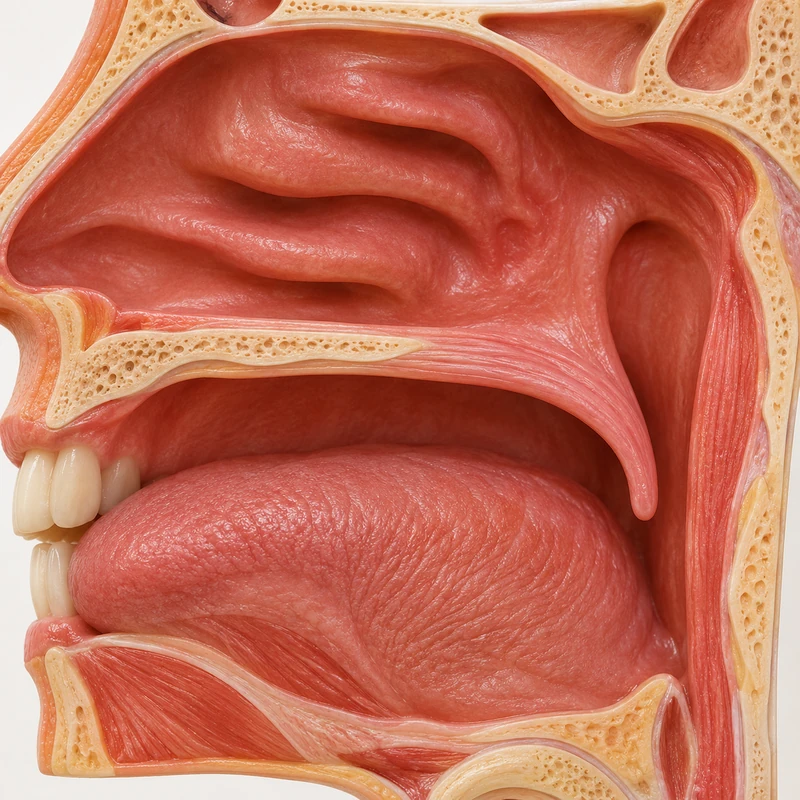
The soft palate forms the back of the roof of the mouth. It moves towards the throat walls for many speech sounds. The passage is open during nasal breathing.
Sounds such as P or S need pressure in the mouth. A gap can cause audible nasal air escape or an excessively nasal resonance.
A specialist team listens to speech and assesses anatomy. When needed, a small camera passed through the nose shows closure during selected speech sounds.
Nasal airflow is normal for M, N and NG.
Speech and language therapists, ENT and, when appropriate, a cleft or craniofacial team work together.
Learned sound errors and a structural gap need different approaches.
Three steps. No audio.
Each scene can also be selected manually.

Silent film with English on-screen text and simplified teaching images.
A blocked nose may reduce nasal resonance. Inadequate closure can produce excess nasal resonance for some sounds.
A still image cannot adequately show coordination or the gap during speaking.
Different causes affect resonance. Specialist assessment determines whether a structural problem is present.
A structural defect may need surgery or a prosthetic approach. Learned articulation errors may also benefit from speech therapy.
Discussing speech and the palate
Has closure been assessed during speech?
Discuss persistent abnormal nasal speech with a primary care, ENT or specialist speech team.
Choose an appointmentAppointment selection at DoctolibAudible escaping air and the resonance of the voice are separate observations. Both can inform assessment.
Editorial research: . General information, not an individual diagnosis or treatment recommendation. Teaching illustrations are simplified and do not depict a patient case.
If you turn this on, this website stores which guides you open, separately from advertising preferences. The markers expire after a fixed 30-day period from activation. The list is not sent to us by this feature. You can turn it off here and delete the markers.
Other people using the same browser profile can also see the markers. German and English versions share one marker. Expired entries are removed the next time you open a page with this feature; deleting browser data may remove them earlier. “Viewed” means opened, not read or completed.