Wait if breathing is difficult?
Call 112 in Germany immediately.

A swallowed dental appliance can enter the oesophagus, stomach or intestine. A missing piece may instead have been inhaled. Shape, size, location and symptoms determine urgency and management. Seek prompt medical assessment for suspected ingestion.
For training & practice ↓
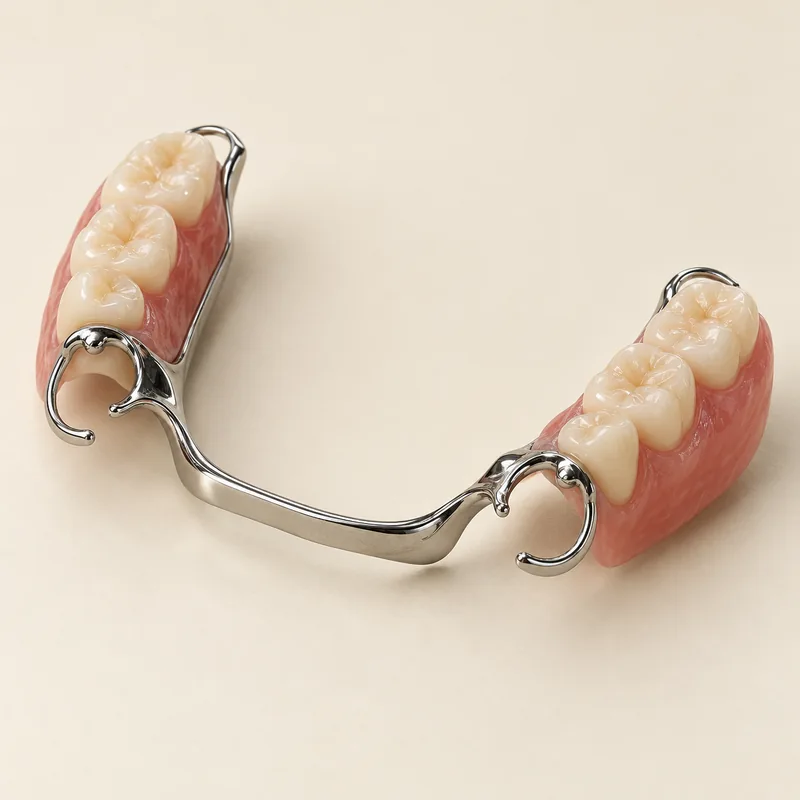
A small smooth crown and a partial denture with sharp clasps pose different risks. A photograph or the remaining denture can help the team identify the shape.
Coughing or breathing problems after an item disappears suggest possible aspiration. Mild symptoms do not reliably exclude a foreign body.
The hospital decides whether imaging, endoscopy or supervised observation is appropriate. Denture acrylic may not show reliably on a plain X-ray.
Call 112 in Germany immediately.
Do not try to push it down with food or induce vomiting.
Breathing normally cannot confirm its location.
Three steps. No audio.
Each scene can also be selected manually.

Silent film with English on-screen text and simplified teaching images.
Ingestion means entry into the digestive tract. Aspiration means entry into the airway.
Seek immediate assessment for a sharp or large object, inability to swallow, throat or chest pain or suspected inhalation.
Only if a clinician has assessed the situation and specifically recommends observation.
Report dimensions, material, any sharp edges or clasps, timing and symptoms.
Information for the emergency team
Which component is missing, and did it have a clasp or sharp edge?
Seek medical assessment first. Once the missing part has been dealt with, a dental team can examine the restoration.
Call the practice · 0221 669 401 80Telephone contactA normal plain X-ray may require further assessment when the material has poor visibility.
Editorial research: . General information, not an individual diagnosis or treatment recommendation. Teaching illustrations are simplified and do not depict a patient case.
If you turn this on, this website stores which guides you open, separately from advertising preferences. The markers expire after a fixed 30-day period from activation. The list is not sent to us by this feature. You can turn it off here and delete the markers.
Other people using the same browser profile can also see the markers. German and English versions share one marker. Expired entries are removed the next time you open a page with this feature; deleting browser data may remove them earlier. “Viewed” means opened, not read or completed.