First step?
Assess the defect and the whole tooth.

A root perforation is an unwanted connection between the inside of a tooth and surrounding tissue. It can arise during treatment or from pathological loss of tooth structure. Whether the tooth can be retained depends on the particular defect.
For training & practice ↓
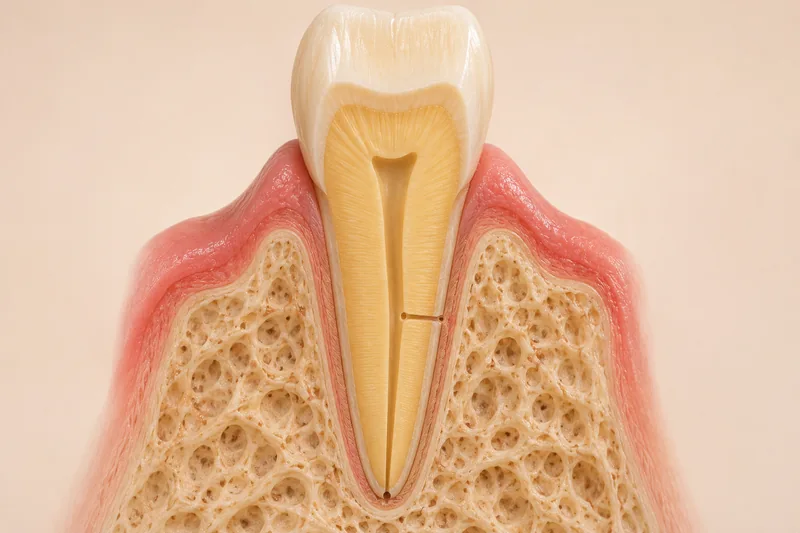
The location and size are assessed. The natural root-tip opening must be distinguished from an unintended additional connection.
Suitable defects may be sealed with an appropriate material. Access, infection and periodontal support influence planning.
A repaired defect needs follow-up. One radiograph cannot establish guaranteed long-term success.
Assess the defect and the whole tooth.
Professional sealing in suitable cases.
Follow-up according to an individual plan.
Three steps. No audio.
Each scene can also be selected manually.

Silent educational film with German on-screen text and simplified teaching images. Not a patient case or a promised treatment outcome. The full English explanation is available as text.
The normal root-tip opening belongs to tooth anatomy. An additional defect may affect surrounding tissues.
No. Perforation means an extra opening; fracture means a crack or break. They require different assessment.
Not necessarily. Restorability and risks are assessed using the complete findings.
Contact the treating practice promptly. Rapidly increasing swelling, fever or significant symptoms need urgent assessment; breathing or swallowing difficulties require immediate medical help.
Editorially suggested question to discuss with Dr Niusha Barahmand Pour:
Which findings support or limit retention of this tooth?
A known defect can be discussed using the findings. For new swelling, fever or significant pain, call directly rather than waiting for a routine online appointment.
Call the practice · 0221 669 401 80Telephone contactThe normal root-tip opening belongs to tooth anatomy. An additional defect may affect surrounding tissues.
Editorial research: . General information, not an individual diagnosis or treatment recommendation. Teaching illustrations are simplified and do not depict a patient case.