What changes?
The root-to-bone connection.

In tooth ankylosis, parts of the root are directly fused to surrounding bone, without the normal periodontal-ligament space in those areas. As neighbouring structures continue growing, the tooth may appear lower. Not every low-positioned tooth is ankylosed.
For training & practice ↓
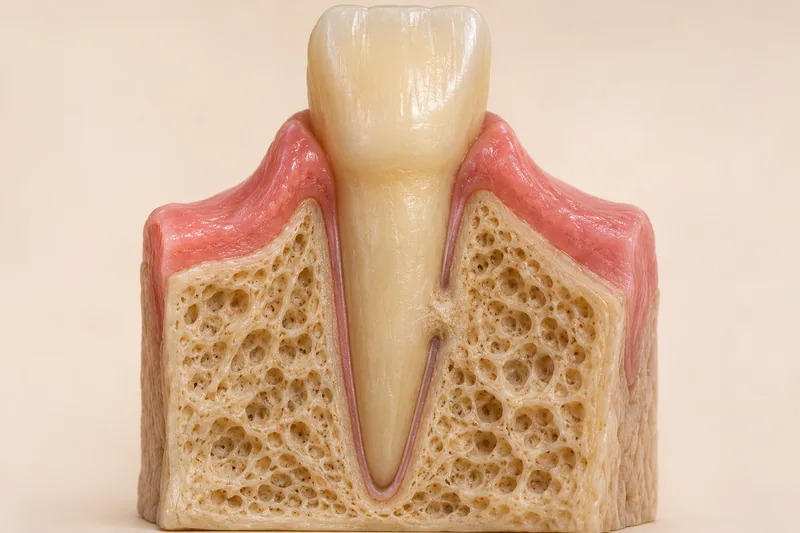
Normally, a periodontal ligament lies between root and bone. Ankylosis involves areas of direct contact.
In children, infraocclusion may become noticeable. The tooth is not simply actively sinking into the jaw; the surroundings continue developing.
Primary teeth, permanent teeth and post-trauma situations require different plans. Space, the successor and growth guide management.
The root-to-bone connection.
Consider growth and the successor.
Attend scheduled follow-up.
Three steps. No audio.
Each scene can also be selected manually.

Silent educational film with German on-screen text and simplified teaching images. Not a patient case or a promised treatment outcome. The full English explanation is available as text.
Ankylosis describes a tissue connection. Impaction describes failure to erupt normally and may have other causes.
Not simply. An ankylosed tooth does not respond like a normally supported tooth. Do not increase forces yourself.
No. Monitoring, restoration or other measures depend on findings and development.
Yes, particularly after severe injury to the root surface. This is one reason follow-up after trauma matters.
Editorially suggested question to discuss with Dr Niusha Barahmand Pour:
How do growth and the successor affect the plan for this tooth?
A low-positioned primary tooth or change following trauma needs assessment.
Have tooth position checkedAppointment selection at DoctolibAnkylosis describes a tissue connection. Impaction describes failure to erupt normally and may have other causes.
Editorial research: . General information, not an individual diagnosis or treatment recommendation. Teaching illustrations are simplified and do not depict a patient case.