Where?
One tooth row in each jaw.

A dental arch is the curved arrangement of teeth in the upper or lower jaw. Its form and width vary between people. Available space also depends on tooth size and position.
For training & practice ↓
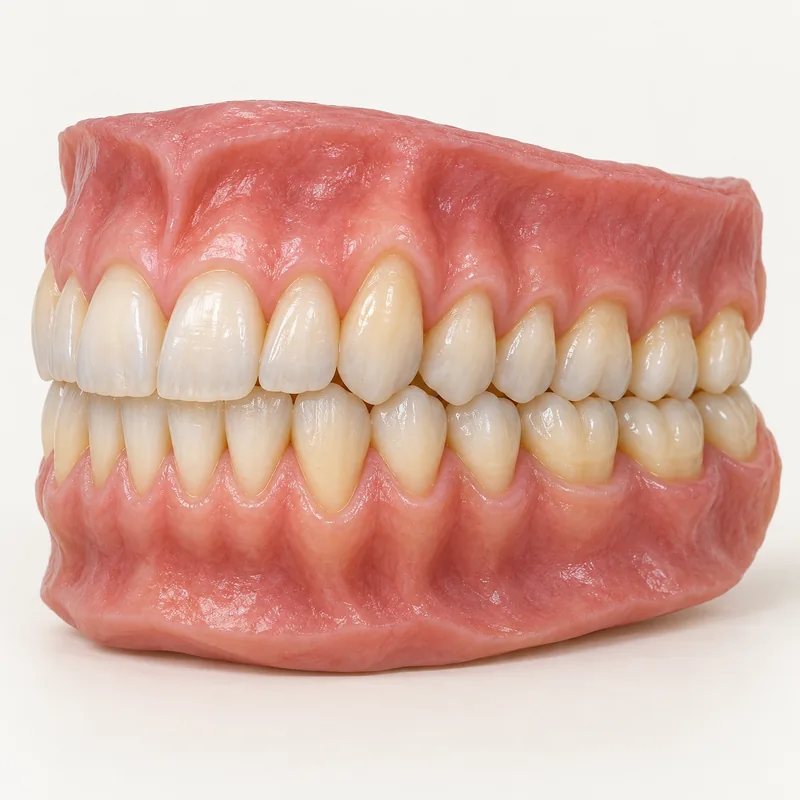
Upper and lower arches meet when biting. Their shapes need to be considered together with their contacts.
Larger teeth need more room. An arch that looks narrow does not by itself establish a need for expansion.
The natural dental arch and the archwire of fixed braces have similar names but are different things.
One tooth row in each jaw.
Arch dimensions, tooth size and position.
No; natural variation is usual.
Three steps. No audio.
Each scene can also be selected manually.

Silent educational film with German on-screen text and simplified teaching images. Not a patient case or a promised treatment outcome. The full English explanation is available as text.
A particular arch shape is not a disease or proof that correction is needed.
No. Individual variation is normal and matters in planning.
Attempts using pressure, elastics or unassessed devices can cause harm. Changes need professional planning.
A scan records shape. It does not replace examination of the teeth, gums and bite.
Editorially suggested question to discuss with Dr Niusha Barahmand Pour:
How do my tooth sizes, arches and bite fit together?
Troubled by crowding or gaps? Space and bite need to be assessed together.
Discuss tooth positionAppointment selection at DoctolibA particular arch shape is not a disease or proof that correction is needed.
Editorial research: . General information, not an individual diagnosis or treatment recommendation. Teaching illustrations are simplified and do not depict a patient case.