Meaning?
Widening the tooth row.

Dental arch expansion means widening the tooth row. This can involve moving or tipping teeth; some methods also affect upper jaw width. The possible and appropriate effects depend on growth, bone, gums and bite.
For training & practice ↓
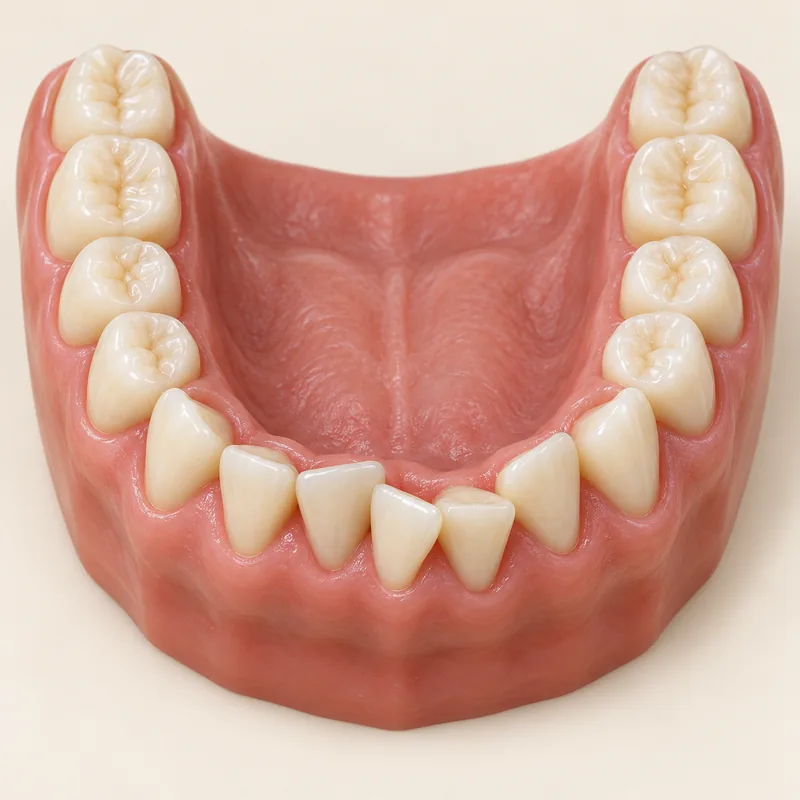
Changing tooth positions can widen the arch. This does not remove its bony limits.
Palatal expansion is a specific approach for appropriate findings. It is not equivalent to every aligner expansion.
Planning considers the opposing arch and subsequent retention. More width is not better for everyone.
Widening the tooth row.
No; effects depend on the method.
Bone, gums and individual bite.
Three steps. No audio.
Each scene can also be selected manually.

Silent educational film with German on-screen text and simplified teaching images. Not a patient case or a promised treatment outcome. The full English explanation is available as text.
Dentoalveolar expansion and skeletal palatal expansion are not the same.
Different methods may be considered depending on the findings. Treatment for children cannot simply be transferred to adults.
Movement beyond favourable tissue limits can contribute to problems. Bone and gums therefore need assessment.
No. Breathing symptoms need their own medical assessment; a narrow tooth row does not establish the cause.
Editorially suggested question to discuss with Dr Niusha Barahmand Pour:
Is the aim to change tooth position or skeletal jaw width?
If expansion is proposed, its aim, tissue limits and retention should be clearly explained.
Discuss tooth-position planningAppointment selection at DoctolibDentoalveolar expansion and skeletal palatal expansion are not the same.
Editorial research: . General information, not an individual diagnosis or treatment recommendation. Teaching illustrations are simplified and do not depict a patient case.