What are cusps for?
They form the shaped chewing surface.

A cusp is a raised part of a tooth crown. On back teeth, cusps combine with grooves and hollows to form the chewing surface. Their number and shape vary with tooth type and development; not every uneven area is damage.
For training & practice ↓
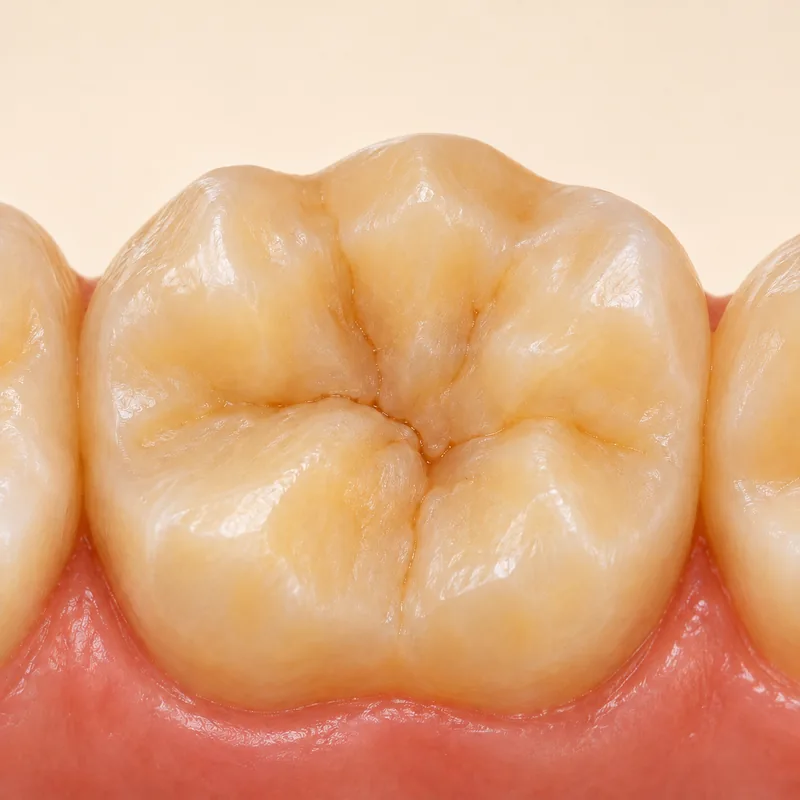
The shaped surface helps break down food. Cusps are tooth structure, not deposits or attached stones.
Upper and lower surfaces work together during chewing. A new filling is also checked for interfering contacts.
A newly fractured cusp or pain on biting needs assessment. Do not file it down or repeatedly bite to test it.
They form the shaped chewing surface.
Tooth tissue, cracks and bite contacts.
Do not file the tooth or use hard objects as a bite test.
Three steps. No audio.
Each scene can also be selected manually.

Silent educational film with German on-screen text and simplified teaching images. Not a patient case or a promised treatment outcome. The full English explanation is available below.
The shaped surface helps break down food. Cusps are tooth structure, not deposits or attached stones.
Upper and lower surfaces work together during chewing. A new filling is also checked for interfering contacts.
A newly fractured cusp or pain on biting needs assessment. Do not file it down or repeatedly bite to test it.
A cusp is a raised area. A fissure is a narrow groove within the chewing surface.
No. Tooth types and individual forms differ. One count does not apply to every tooth.
Not necessarily. Staining and decay need assessment on the actual tooth.
Treatment may be possible; the choice depends on remaining tissue, crack extent and tooth condition.
An editorially suggested question for a discussion with Dr med dent Niusha Barahmand Pour:
Is only a cusp affected, or does the change extend deeper?
A new sharp edge or chewing pain? Have the tooth and bite checked.
Have the tooth and bite checkedAppointment selection at DoctolibA cusp is a raised area. A fissure is a narrow groove within the chewing surface.
Editorial research: . General information, not an individual diagnosis or treatment recommendation. Teaching illustrations are simplified and do not depict a patient case.