Which material is used?
Different dental materials, including certain cements, may be used. They are not interchangeable; selection and use depend on the specific purpose.

A cavity lining is an additional layer of material beneath the main filling. A thin version is also called a liner. Depending on the findings, it may provide a local protective or intermediate layer. Not every filling needs one. Its suitability depends on factors including the depth of the cavity, the condition of the pulp and the planned restoration.
For training & practice ↓
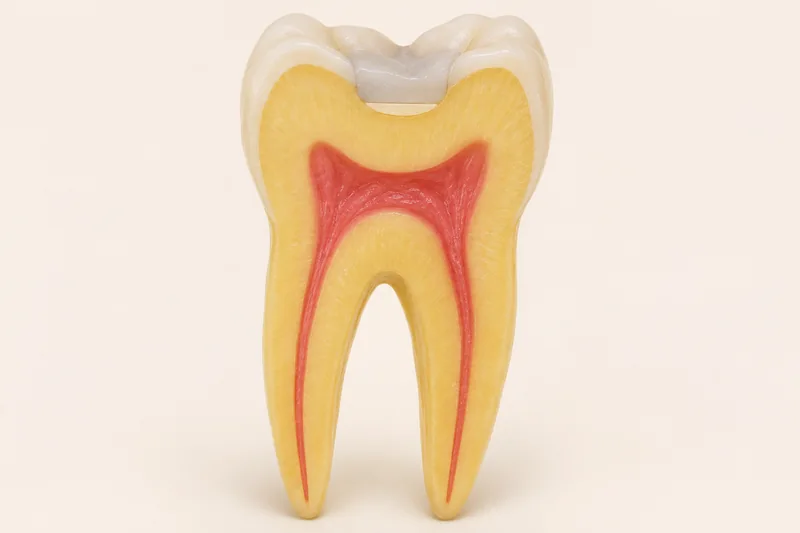
The main filling replaces missing tooth structure. A lining is an additional layer underneath it. The cutaway model separates the filling, optional lining, dentine and pulp; the layer is enlarged for explanation.
More layers do not automatically mean more protection. For deep caries in vital permanent teeth that are either symptom-free or show symptoms consistent with reversible pulpitis, the European S3 guideline suggests not routinely placing a cavity liner.
A liner alone does not describe treatment of the tissue inside the tooth. Diagnosis, appropriate material selection and a well-sealed restoration matter. Exposure of the pulp raises a different treatment question.
Different dental materials, including certain cements, may be used. They are not interchangeable; selection and use depend on the specific purpose.
No. Intended protection does not establish an additional benefit in every situation or guarantee healing.
Not automatically. Recommendations must match the tooth type and pulp findings. The European recommendation discussed here concerns permanent teeth.
Three steps. No audio.
Each scene can also be selected manually.

Silent educational film with German on-screen text and simplified teaching images. Not a patient case or a promised treatment outcome. The full English explanation is available as text.
The presence of a material under a filling does not establish whether the pulp is healthy, inflamed or exposed. A material name cannot replace a diagnosis. The existing explanations of direct and indirect pulp capping explore this distinction.
An additional lining is not always necessary. The current guideline advises against routine use in defined deep cavities in permanent teeth. This does not mean that liners are always unsuitable or that treatment is incomplete without one. Ask about the findings and the planned restoration.
The terms describe different aspects. A lining names an additional material layer. In direct pulp capping, a suitable material contacts exposed pulp. With an indirect approach, dentine remains between the restoration and pulp. The material layer, caries removal and treatment aim therefore need separate explanations.
No. Symptoms do not reveal which layer is missing or whether a liner would have been needed. Symptoms can occur despite a lining, and reliable prevention of later sensitivity has not been established. Persistent, worsening or spontaneous pain should be assessed by a dentist.
Editorially suggested question to discuss with Dr Niusha Barahmand Pour:
What would a liner do for my tooth, and is it needed for these findings?
Ask which layers make up your filling and what each is intended to do.
Discuss the filling’s structureAppointment selection at DoctolibEuropean recommendation R2 concerns deep caries in vital permanent teeth with no symptoms or reversible pulpitis. It is not a blanket rule for every primary tooth, pulp exposure or restorative material. The evidence on additional benefits of liners is mainly low to very low certainty.
Editorial research: . General information, not an individual diagnosis or treatment recommendation. Teaching illustrations are simplified and do not depict a patient case.