What does chewing stimulate?
Increased saliva production.

Chewing stimulates saliva. After a meal, sugar-free gum can support the buffering action of saliva on acids in the mouth. For people who can chew comfortably, it can complement their daily oral care.
For training & practice ↓
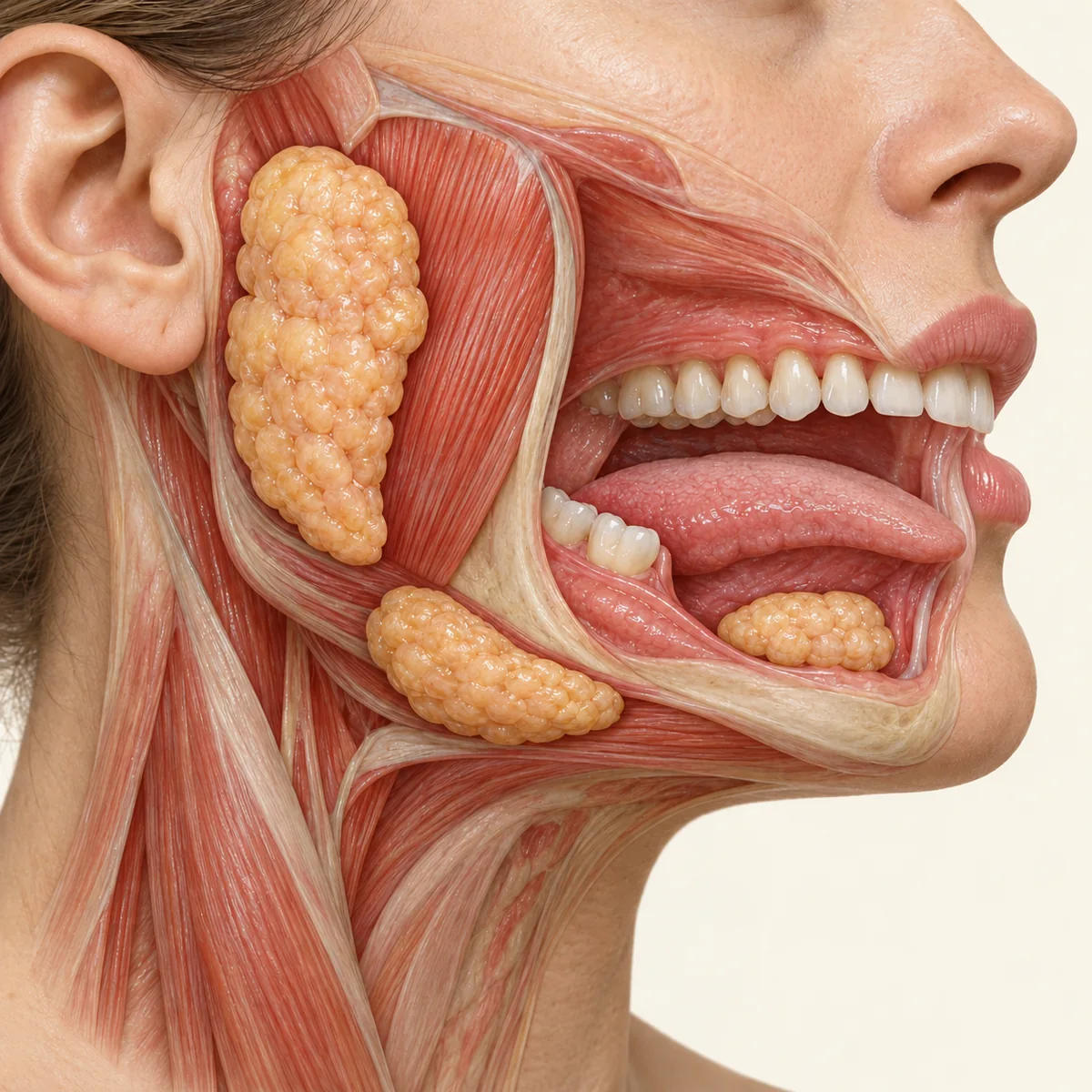
The movement and taste of chewing stimulate the salivary glands. Increased saliva helps dilute and buffer acids in the mouth.
Many sugar-free gums contain xylitol or sorbitol. They provide sweetness without feeding acid production by decay-associated bacteria in the same way as table sugar.
Gum does not reliably remove adherent plaque or clean between teeth. Brushing with fluoride toothpaste and cleaning between teeth remain part of daily care.
Increased saliva production.
Examples include xylitol and sorbitol.
Brushing with fluoride toothpaste and cleaning between teeth.
Three steps. No audio.
Each scene can also be selected manually.

Silent educational film with German on-screen text and simplified teaching images. Not a patient case or a promised treatment outcome. The full English explanation is available as text.
Sugar-containing gum supplies fermentable sugars to oral bacteria. Check the ingredients or a sugar-free label.
The movement and taste of chewing stimulate the salivary glands. Increased saliva helps dilute and buffer acids in the mouth.
Many sugar-free gums contain xylitol or sorbitol. They provide sweetness without feeding acid production by decay-associated bacteria in the same way as table sugar.
Gum does not reliably remove adherent plaque or clean between teeth. Brushing with fluoride toothpaste and cleaning between teeth remain part of daily care.
Extra chewing can be unhelpful with tooth or jaw pain, including pain with grinding. Stop chewing and have persistent symptoms assessed.
Sugar-containing gum supplies fermentable sugars to oral bacteria. Check the ingredients or a sugar-free label.
A question you could ask
Would gum suit me given my dry mouth or jaw symptoms?
Discuss dry mouth or pain when chewing before using gum regularly to manage it.
Discuss at a dental appointmentAppointment selection at DoctolibSugar-containing gum supplies fermentable sugars to oral bacteria. Check the ingredients or a sugar-free label.
Editorial research: . General information, not an individual diagnosis or treatment recommendation. Teaching illustrations are simplified and do not depict a patient case.
If you turn this on, this website stores which guides you open, separately from advertising preferences. The markers expire after a fixed 30-day period from activation. The list is not sent to us by this feature. You can turn it off here and delete the markers.
Other people using the same browser profile can also see the markers. German and English versions share one marker. Expired entries are removed the next time you open a page with this feature; deleting browser data may remove them earlier. “Viewed” means opened, not read or completed.