Are bumps at the back of the tongue normal?
Large circumvallate papillae form a V-shaped row at the back of the mobile tongue.

The base of the tongue is its back third. It sits in the middle part of the throat, the oropharynx. Sticking your tongue out reveals little of this area. During swallowing, the tongue base moves towards the back wall of the throat and helps move the mouthful onwards.
For training & practice ↓
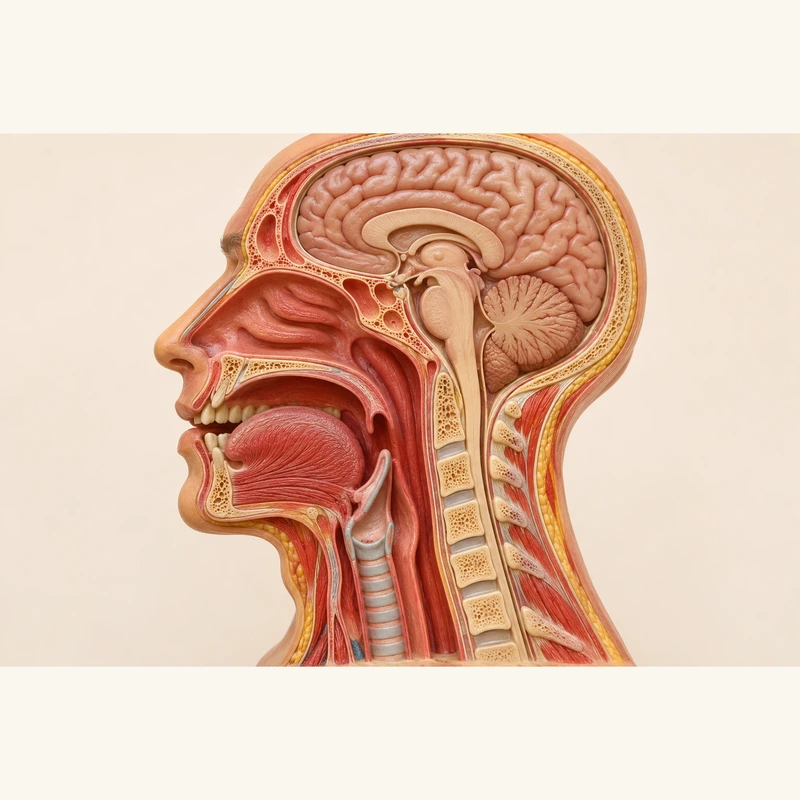
The base of the tongue lies deep in the oropharynx. During swallowing it moves towards the back of the throat.
Lifting the tongue tip reveals the floor of the mouth. The tongue base lies much farther back.
Looking through the open mouth reveals the palate and its arches. A flexible scope can help examine the tongue base more closely.
Large circumvallate papillae form a V-shaped row at the back of the mobile tongue.
The floor of the mouth lies beneath the mobile part of the tongue.
An ENT specialist can use a thin flexible scope to view this hard-to-see area. Seek medical assessment for persistent one-sided throat symptoms, worsening difficulty swallowing or a new lump in the neck. Difficulty swallowing
Three steps. No audio.
Each scene can also be selected manually.

Silent film with English on-screen text and simplified teaching images.
Lifting the tongue tip reveals the floor of the mouth. The tongue base lies much farther back.
Large circumvallate papillae form a V-shaped row at the back of the mobile tongue. Behind them, the tongue base contains lymphoid tissue called the lingual tonsil. These structures can give the surface an uneven appearance. A new lump on just one side deserves an examination. Tongue papillae
The floor of the mouth lies beneath the mobile part of the tongue. You can see it when you lift the tip. The base of the tongue lies farther back in the throat. Being able to describe where something feels different can help during an examination. Floor of the mouth
An ENT specialist can use a thin flexible scope to view this hard-to-see area. Seek medical assessment for persistent one-sided throat symptoms, worsening difficulty swallowing or a new lump in the neck. Difficulty swallowing
A question to ask
Do my symptoms involve the mobile tongue or the throat?
Persistent one-sided throat symptoms or worsening swallowing difficulty warrant ENT assessment.
Find an ENT practice in GermanyFind a medical practice with 116117The mobile tongue belongs to the oral cavity and the tongue base to the oropharynx. Tongue-base contact with the posterior pharyngeal wall is a specific feature assessed in instrumental swallowing studies. The exact site of origin also matters when classifying a tumour.
Editorial research: . General information, not an individual diagnosis or treatment recommendation. Teaching illustrations are simplified and do not depict a patient case.
If you turn this on, this website stores which guides you open, separately from advertising preferences. The markers expire after a fixed 30-day period from activation. The list is not sent to us by this feature. You can turn it off here and delete the markers.
Other people using the same browser profile can also see the markers. German and English versions share one marker. Expired entries are removed the next time you open a page with this feature; deleting browser data may remove them earlier. “Viewed” means opened, not read or completed.