
Dental Knowledge · Tooth preservation
Wisdom tooth pain: causes, warning signs and next steps
Wisdom tooth pain can be caused by inflamed gum tissue over a partially erupted tooth. Tooth decay or a neighbouring tooth may also be responsible. Persistent or worsening symptoms need examination. Seek prompt dental advice if there is swelling, fever or restricted mouth opening.
Published on
 KI-generiert · AI-generated
In this guide
Why can a partially erupted tooth hurt?
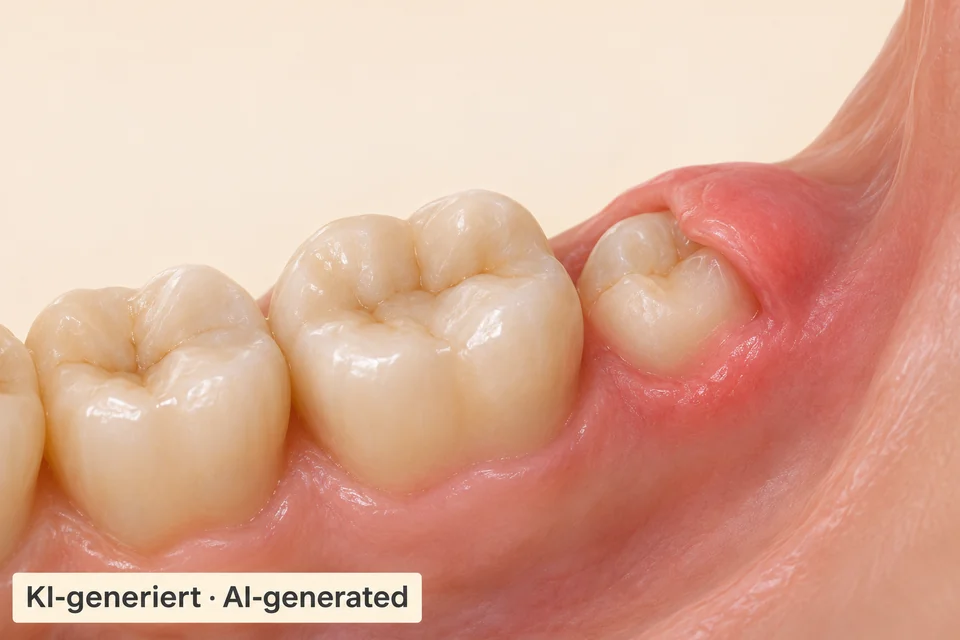
When gum tissue still covers part of the crown, it can become inflamed. This is called pericoronitis. Symptoms may include pain, red or swollen gums, an unpleasant taste and difficulty opening the mouth. Contact a dental service the same day for fever or increasing swelling; the warning signs below require immediate medical help.
The location alone does not reliably explain the pain. The examination also considers tooth decay, neighbouring teeth and other possible causes. A photograph or the impression that “it hurts right at the back” cannot replace this assessment.
SDCEP: Acute pericoronitis · IQWiG: Weisheitszähne · NHS: Toothache · HSE: Pericoronitis guideline, V2
When should I avoid waiting?
Contact a dental service the same day for noticeable swelling, fever, increasing pain or a new restriction in mouth opening. If the practice is closed, contact the dental emergency service.
For breathing difficulty or symptoms that make swallowing or speaking difficult, call 112 immediately in Germany. Swelling of the floor of the mouth or severe restriction that makes the mouth almost impossible to open also needs immediate assessment in an emergency department. Call 112 if there may be a threat to life or you are unsure whether this is the case. Do not dismiss these signs as normal tooth eruption or wait for them to pass.
HSE: Pericoronitis guideline, V2 · Bundesministerium für Gesundheit: Nummern für den Notfall · NHS: Dental abscess
What can I do before the examination?
Gently clean the area as far as possible without significant pain. Soft foods may be more comfortable; avoid chewing on the painful side. A pharmacist can advise on suitable pain medicines, taking your health conditions and other medicines into account. Do not exceed the amount stated in the product leaflet.
Mouth rinses or temporary pain relief do not automatically resolve the cause. If symptoms worsen or warning signs develop, contact a dental service again.
Does the wisdom tooth have to be removed immediately?
Not automatically. Inflammation around a partially erupted tooth may first require professional cleaning and irrigation of the affected area. Whether removal is appropriate is discussed in light of the findings, for example with recurring inflammation or damage to the tooth or neighbouring teeth.
The decision takes account of tooth position, symptoms, whether it can be maintained and the possible risks of removal. Examination may therefore lead to further assessment or a referral. Treatment is individual; this guide is not a recommendation for surgery.
HSE: Pericoronitis guideline, V2 · IQWiG: Weisheitszähne entfernen – ja oder nein? · IQWiG: Weisheitszähne
Why are antibiotics not always prescribed?
Local measures are the main approach to localised pericoronitis. Antibiotics may be needed if infection spreads or there are systemic symptoms; the treating clinician makes that decision. They do not replace local treatment. Do not use leftover antibiotics without medical advice.
HSE: Pericoronitis guideline, V2 · SDCEP: Acute pericoronitis
The tooth has been removed and the pain is getting worse again
Pain and swelling can occur initially after removal. If pain clearly increases after several days instead of settling, or there is a new unpleasant taste, fever or increasing swelling, contact the treating practice. It needs examination; the intensity of pain alone cannot identify the cause.
Common questions
How long is wisdom tooth pain normal?
There is no reliably “normal” duration without knowing the cause. Persistent or worsening pain needs examination. Do not wait several days if warning signs appear.
Can the inflammation return?
Yes. Problems around a partially erupted tooth can recur. Repeated episodes are a reason to discuss long-term management and whether removal may be appropriate.
Do symptom-free wisdom teeth need preventive removal?
There is no universal rule. The decision depends on the individual findings and foreseeable risks. Our separate guide explains the questions that matter when considering removal.
Related reading
Sources and further information
Research and editorial work: 15 November 2026. General information; individual findings and recommendations are established during an examination.