Why consider a familiar product?
A contact allergy can develop after earlier use without symptoms.

In allergic contact cheilitis the skin of the lips reacts to a substance after contact. Lips may redden, scale, itch or crack. Fragrances and flavourings in personal care products are possible triggers.
For training & practice ↓
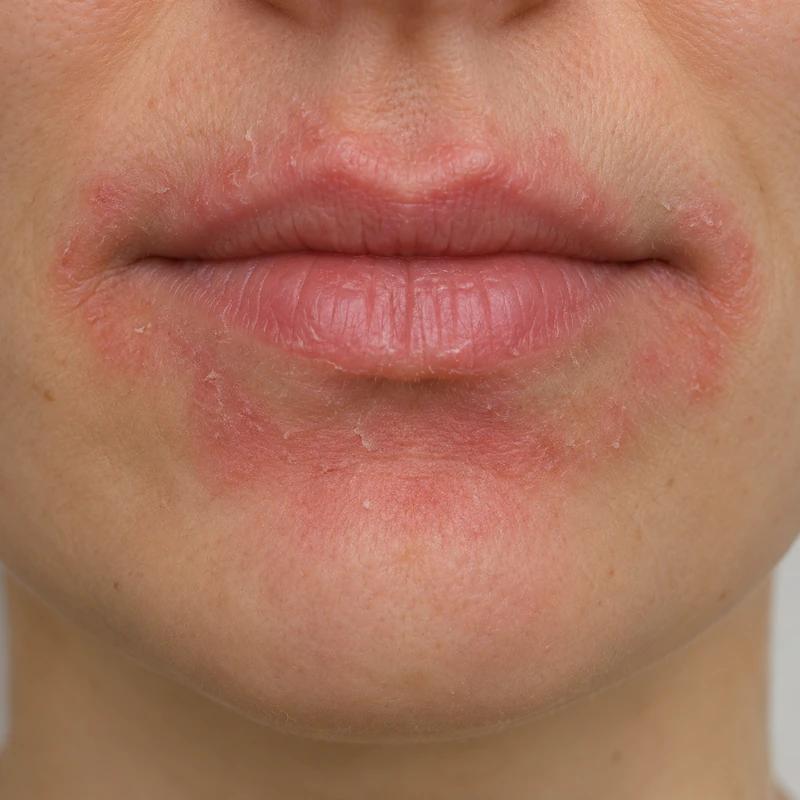
Dry, red or cracked patches may affect the vermilion or nearby skin. Appearance alone cannot reliably distinguish allergy from irritation.
Lip care, cosmetics and toothpaste repeatedly touch the lips. Bring the products and their ingredient lists, including ones used for a long time.
A dermatologist can patch-test selected substances. Each reaction is interpreted alongside the products used and the clinical history.
A contact allergy can develop after earlier use without symptoms.
Product names, ingredient lists and a timeline.
The team checks actual exposure to the substance.
Three steps. No audio.
Each scene can also be selected manually.

Silent film with English on-screen text and simplified teaching images.
Saliva, friction or other irritants can also cause eczema without an allergy.
Plant-derived fragrances and flavourings can also trigger contact allergy.
Self-testing can irritate skin. A specialist selects the substances, concentrations and interpretation.
Avoid the triggers found to be relevant. Broad restrictions can make care harder.
For your medical or dental consultation
Which of my products might be relevant to testing?
Persistent lip eczema warrants dermatological assessment.
Choose an appointmentAppointment selection at DoctolibA positive sensitisation test has to be related to everyday exposure.
Editorial research: . General information, not an individual diagnosis or treatment recommendation. Teaching illustrations are simplified and do not depict a patient case.
If you turn this on, this website stores which guides you open, separately from advertising preferences. The markers expire after a fixed 30-day period from activation. The list is not sent to us by this feature. You can turn it off here and delete the markers.
Other people using the same browser profile can also see the markers. German and English versions share one marker. Expired entries are removed the next time you open a page with this feature; deleting browser data may remove them earlier. “Viewed” means opened, not read or completed.