What do analgesics do?
Relieve pain.

Analgesics are medicines that relieve pain. In dentistry they can provide temporary relief or help after a procedure. They do not automatically resolve decay, an inflamed pulp or an abscess. Selection depends on the active ingredient, medical conditions, other medicines and individual risks. Nonprescription medicines can also cause harm if unsuitable or used incorrectly.
For training & practice ↓
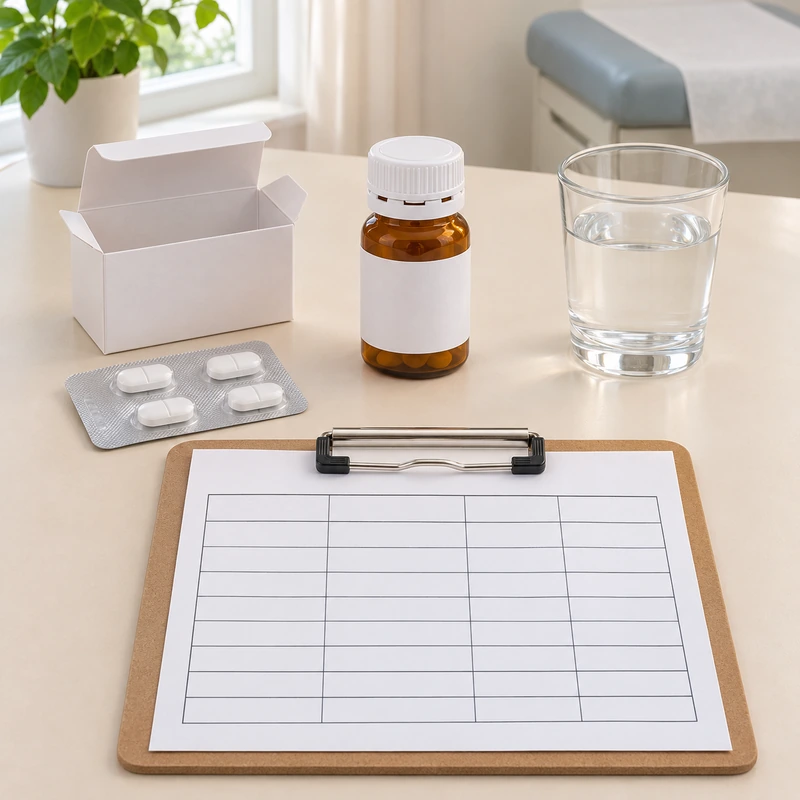
Different packs may contain the same active ingredient. Have the ingredients checked before adding another medicine. An unintended duplicate dose can be dangerous.
Follow the prescription or leaflet and individual advice. Do not independently combine medicines or increase amounts. Children, pregnancy and some conditions require special consideration.
Persistent or worsening pain needs dental assessment. A painkiller may reduce symptoms while the cause remains. Call 112 in Germany for breathing difficulty or rapidly threatening swelling.
Relieve pain.
Not automatically; assessment and treatment may still be needed.
No; contraindications and interactions matter.
Three steps. No audio.
Each scene can also be selected manually.

Silent educational film with German on-screen text and simplified teaching images. Not a patient case or a promised treatment outcome. The full English explanation is available as text.
A painkiller alters pain perception or inflammatory responses. It replaces neither diagnosis nor necessary dental treatment. Antibiotics are a different drug group and are not general substitutes for analgesics.
No. Suitable nonopioid medicines are the initial option for many acute dental pain situations. Opioids carry additional risks and are not a universal standard solution. Selection is individual.
Only after checking the specific combination. Some combinations may be useful; others increase risks or duplicate an ingredient. Ask a pharmacy or the treating team to check your packs and medication list.
Get medical advice or emergency help immediately and keep the packs available. Paracetamol overdose can initially cause few symptoms yet still be dangerous; do not wait for symptoms.
You can bring this question to your appointment:
Which medicine fits my conditions and other medicines, and when should the dental cause be reassessed?
An individual assessment can clarify the findings and whether referral is needed.
Arrange an assessmentAppointment selection at DoctolibA painkiller alters pain perception or inflammatory responses. It replaces neither diagnosis nor necessary dental treatment. Antibiotics are a different drug group and are not general substitutes for analgesics.
Editorial research: . General information, not an individual diagnosis or treatment recommendation. Teaching illustrations are simplified and do not depict a patient case.
If you turn this on, this website stores which guides you open, separately from advertising preferences. The markers expire after a fixed 30-day period from activation. The list is not sent to us by this feature. You can turn it off here and delete the markers.
Other people using the same browser profile can also see the markers. German and English versions share one marker. Expired entries are removed the next time you open a page with this feature; deleting browser data may remove them earlier. “Viewed” means opened, not read or completed.