Does arthralgia mean arthritis?
Arthralgia describes pain, while arthritis means joint inflammation.

Arthralgia means joint pain. For the jaw joint, the clinician checks whether chewing, opening or other movements modify the usual pain and whether the patient recognises that pain during examination of the joint. The term alone does not establish inflammation or wear.
For training & practice ↓
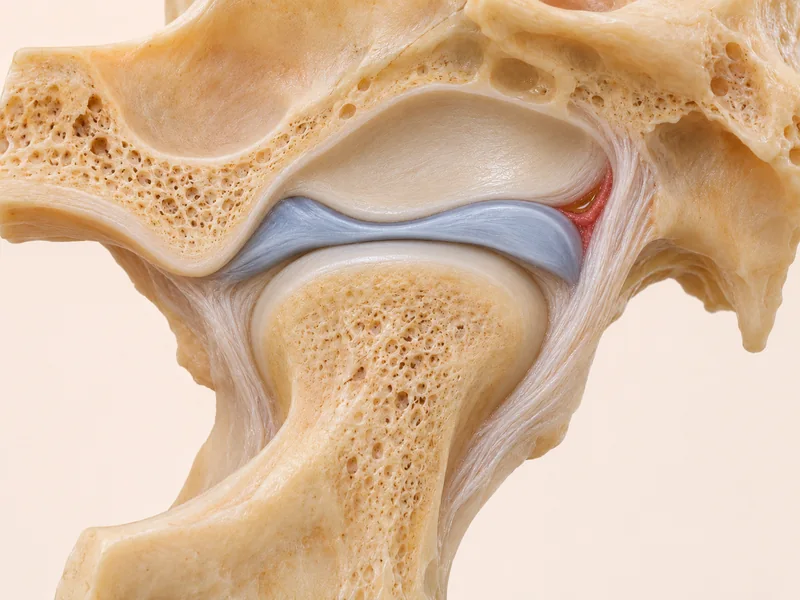
The temporomandibular joint lies just in front of the ear. Pain in that region also prompts consideration of teeth, chewing muscles and other sources.
Chewing muscles can refer pain to nearby areas. Examination of each site helps determine where familiar pain is reproduced.
The important question is whether you recognise the pain from daily life. Tenderness at an unfamiliar site is insufficient on its own.
Arthralgia describes pain, while arthritis means joint inflammation.
History and clinical examination guide any further testing.
Forceful self-testing is unsuitable for diagnosis.
Three steps. No audio.
Each scene can also be selected manually.

Silent film with English on-screen text and simplified teaching images.
Myalgia means muscle pain. Joint and muscle pain may coexist.
A sound without typical symptoms does not meet the criteria for arthralgia. Movement, pain history and function are assessed separately.
Yes. Depending on the findings the clinician checks teeth and other structures. The spot you point to may not be the source.
Record side, onset, relation to chewing or opening, changes in movement and any preceding injury.
Describe which everyday movement elicits symptoms and whether the examination reproduces that pain.
Is my usual pain reproduced over the joint or the chewing muscle?
Following recent trauma, new facial swelling with fever or markedly limited opening, seek prompt assessment, the same day for significant symptoms.
Choose an appointmentAppointment selection at DoctolibTMD is an umbrella term for different pain and functional disorders. Arthralgia describes a specific pain location and clinical pattern.
Editorial research: . General information, not an individual diagnosis or treatment recommendation. Teaching illustrations are simplified and do not depict a patient case.
If you turn this on, this website stores which guides you open, separately from advertising preferences. The markers expire after a fixed 30-day period from activation. The list is not sent to us by this feature. You can turn it off here and delete the markers.
Other people using the same browser profile can also see the markers. German and English versions share one marker. Expired entries are removed the next time you open a page with this feature; deleting browser data may remove them earlier. “Viewed” means opened, not read or completed.