What is measured?
Depending on the method, muscle activity, breathing or heart rate.

Biofeedback is a learning method that measures a body function and returns an immediate visual or audible signal. For jaw-related symptoms, a sensor may record chewing-muscle activity. Guided practice can help a person notice tension sooner and change their response. Biofeedback may form part of treatment; it is not an automatic diagnosis or a guaranteed cure for tooth grinding.
For training & practice ↓
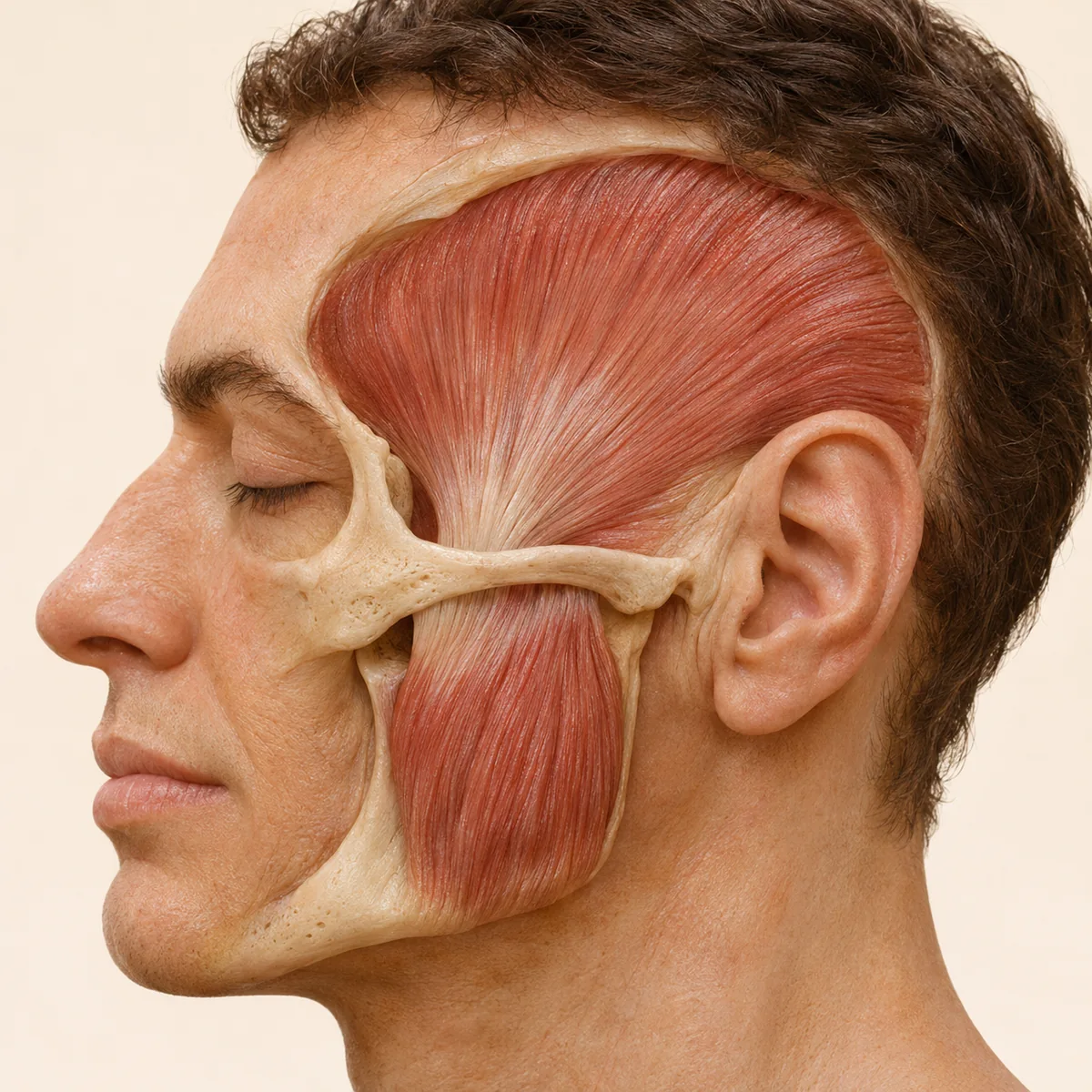
A sensor attached to the skin can record muscle activity. The display shows changes during contraction and relaxation. It does not directly measure pain or establish disease on its own.
Guided training connects the feedback with how the body feels. One aim may be to recognise unconscious jaw tension in everyday situations and practise a more relaxed jaw position.
Suitability depends on symptoms and findings. Biofeedback may complement advice or other measures. Persistent pain still needs assessment, even if a device displays low readings.
Depending on the method, muscle activity, breathing or heart rate.
Noticing body responses and influencing them with guidance.
No; suitability and goals are individual.
Three steps. No audio.
Each scene can also be selected manually.

Silent educational film with German on-screen text and simplified teaching images. Not a patient case or a promised treatment outcome. The full English explanation is available as text.
Biofeedback returns information about measured activity. It need not electrically stimulate the muscle. A splint acts on or protects the chewing system in a different way and is not biofeedback either.
No. Awake bruxism, sleep bruxism and painful jaw disorders are different. Any benefit must be assessed in the relevant setting; a signal alone does not reliably stop the activity.
A reminder alone does not measure a body function. Biofeedback links an actual measurement with prompt feedback. Even a measuring device cannot replace clinical assessment.
The aim is useful learning, not constant self-monitoring. Discuss when and how often to practise and how progress will be assessed.
You can bring this question to your appointment:
Which activity would we measure, what practical goal would we set, and how would we assess benefit?
An individual assessment can clarify the findings and whether referral is needed.
Arrange an assessmentAppointment selection at DoctolibBiofeedback returns information about measured activity. It need not electrically stimulate the muscle. A splint acts on or protects the chewing system in a different way and is not biofeedback either.
Editorial research: . General information, not an individual diagnosis or treatment recommendation. Teaching illustrations are simplified and do not depict a patient case.
If you turn this on, this website stores which guides you open, separately from advertising preferences. The markers expire after a fixed 30-day period from activation. The list is not sent to us by this feature. You can turn it off here and delete the markers.
Other people using the same browser profile can also see the markers. German and English versions share one marker. Expired entries are removed the next time you open a page with this feature; deleting browser data may remove them earlier. “Viewed” means opened, not read or completed.