What should be reported?
Sounds, morning discomfort and sleep concerns.

Sleep bruxism is chewing-muscle activity during sleep. It may be rhythmic or sustained, with or without audible grinding. Whether it requires treatment depends partly on symptoms and damage.
For training & practice ↓
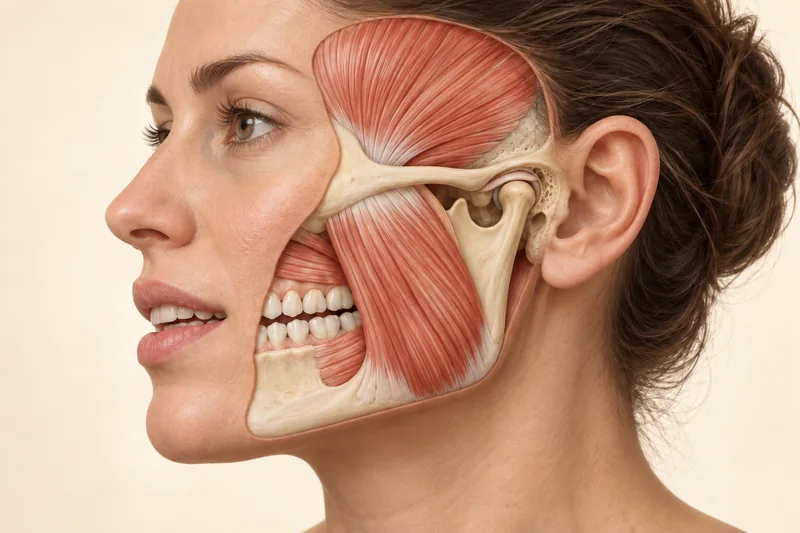
Muscles may contract in short sequences or remain tense for longer. The person often does not notice this directly.
Reported sounds, morning symptoms and tooth wear provide clues. Old wear marks do not establish current activity during sleep.
When indicated, a suitable splint can protect teeth but does not reliably stop the muscle activity. Sleep-related concerns may require medical assessment.
Sounds, morning discomfort and sleep concerns.
Teeth, jaw function and relevant associated factors.
To monitor damage, symptoms and the fit of an existing appliance.
Three steps. No audio.
Each scene can also be selected manually.

Silent educational film with German on-screen text and simplified teaching images. Not a patient case or a promised treatment outcome. The full English explanation is available below.
Muscles may contract in short sequences or remain tense for longer. The person often does not notice this directly.
Reported sounds, morning symptoms and tooth wear provide clues. Old wear marks do not establish current activity during sleep.
When indicated, a suitable splint can protect teeth but does not reliably stop the muscle activity. Sleep-related concerns may require medical assessment.
An occlusal splint and a mandibular advancement appliance have different purposes. They are not interchangeable.
No. Wear has several causes and may reflect earlier activity. Findings need to be considered together.
Not automatically. Additional recordings are selected according to the question and possible associated conditions.
Observed pauses, marked snoring or excessive daytime sleepiness should be discussed with a doctor. A grinding splint does not replace sleep-apnoea assessment.
Editorially suggested question to discuss with Dr Niusha Barahmand Pour:
Which findings suggest current loading, and does my sleep need further assessment?
Night-time grinding and its possible consequences can be assessed together.
Discuss night-time grindingAppointment selection at DoctolibAn occlusal splint and a mandibular advancement appliance have different purposes. They are not interchangeable.
Editorial research: . General information, not an individual diagnosis or treatment recommendation. Teaching illustrations are simplified and do not depict a patient case.