Who may find this relevant?
People considering small changes to tooth shape or edges; examination establishes suitability.

Composite bonding adds and shapes tooth-coloured resin directly on a tooth. It may address small chipped edges or certain differences in shape. Suitability depends on the remaining tooth, gums and bite.
For training & practice ↓
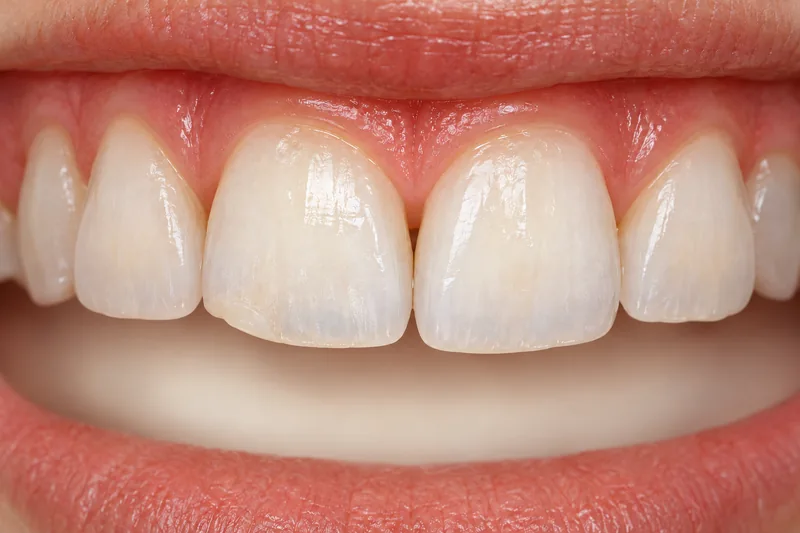
The added layer changes the contour. It does not move the natural tooth into a new position.
Following appropriate preparation, an adhesive system joins the resin to the tooth. The material is shaped and hardened with a dedicated curing light.
The contour and surface are finished and polished. Bite contacts matter too. Composite can stain, wear or chip over time.
People considering small changes to tooth shape or edges; examination establishes suitability.
With the findings and the extent of the proposed change.
Daily cleaning and review of the surface, margins and bite.
Three steps. No audio.
Each scene can also be selected manually.

Silent educational film with German on-screen text and simplified teaching images. Not a patient case or a promised treatment outcome. The full English explanation is available below.
The added layer changes the contour. It does not move the natural tooth into a new position.
Following appropriate preparation, an adhesive system joins the resin to the tooth. The material is shaped and hardened with a dedicated curing light.
The contour and surface are finished and polished. Bite contacts matter too. Composite can stain, wear or chip over time.
Composite is the material. Bonding describes adhesive attachment and, in cosmetic dentistry, can also mean a direct build-up of tooth shape.
Composite is also used for fillings. Here, bonding means building up tooth shape directly; a filling primarily replaces a defect.
That cannot be promised. Existing defects, restorations, available space and surface preparation determine the approach.
There is no fixed lifespan. Loading, size and care matter. Depending on the findings, polishing, repair or replacement may be considered.
An editorially suggested question for a discussion with Dr med dent Niusha Barahmand Pour:
What change in shape could be considered for my teeth, and how would my bite affect the plan?
Concerned about an edge or tooth shape? An appointment can help clarify the options.
Discuss tooth shapeAppointment selection at DoctolibComposite is the material. Bonding describes adhesive attachment and, in cosmetic dentistry, can also mean a direct build-up of tooth shape.
Editorial research: . General information, not an individual diagnosis or treatment recommendation. Teaching illustrations are simplified and do not depict a patient case.