What matters?
Knowing the material actually used.

A dental material allergy is an immune response to a component of a dental material. Burning, redness or swelling can also have other causes. Examination, material information and any targeted allergy testing must be interpreted together.
For training & practice ↓
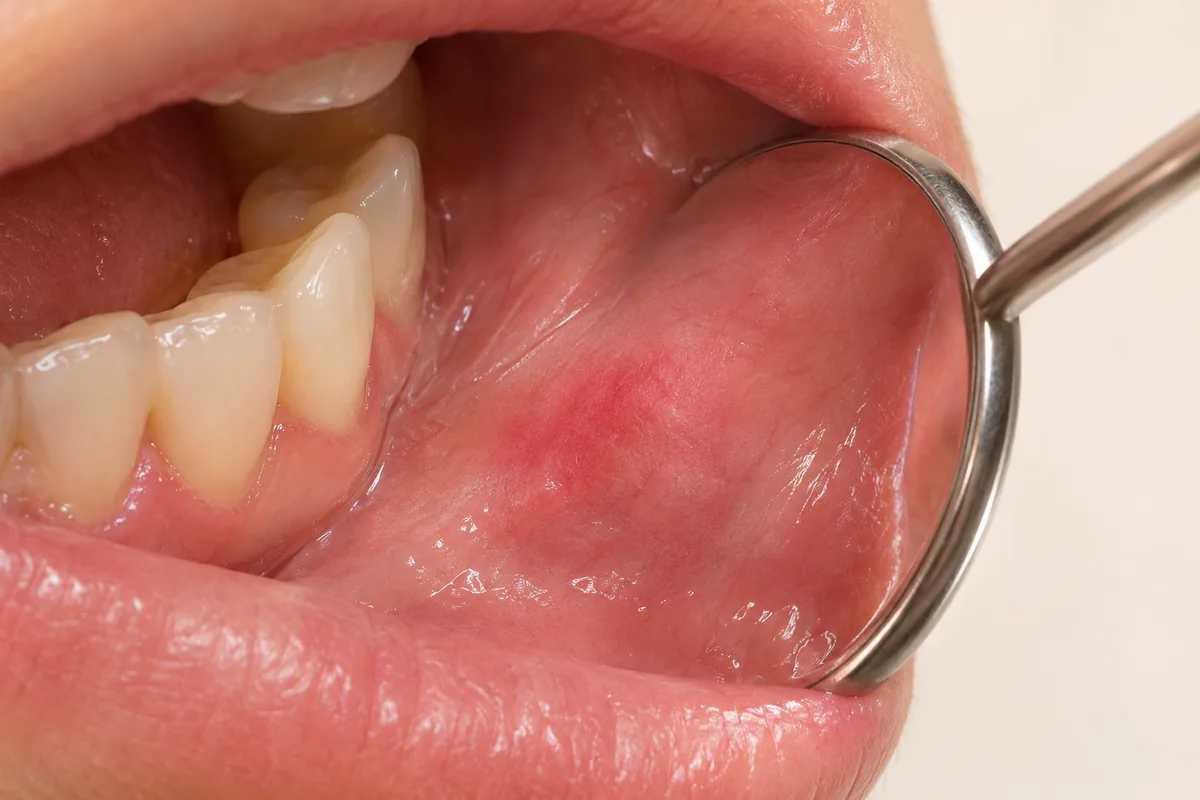
Pressure, plaque, inflammation and mechanical irritation can also cause symptoms. A new restoration followed by symptoms does not alone prove an allergy.
Material records help establish possible exposure. If the history supports it, specialist allergy assessment, such as patch testing for selected contact allergens, may be appropriate.
A positive skin test indicates sensitisation. Its relevance to oral symptoms requires clinical assessment. Restorations should not be removed as a precaution without a reasoned diagnosis.
Knowing the material actually used.
Symptoms, local causes and allergy where there is a justified suspicion.
Blanket replacement without a diagnosis.
Three steps. No audio.
Each scene can also be selected manually.

Silent educational film with German on-screen text and simplified teaching images. Not a patient case or a promised treatment outcome. The full English explanation is available as text.
An abnormal test is only part of the assessment. The link between exposure, symptoms and findings determines whether a material is clinically relevant.
No. Replacement needs an individual, justified decision. Being metal-free does not establish better tolerance for everyone.
No. The implant guideline distinguishes inflammatory intolerance from classical contact allergy. It advises against patch testing or lymphocyte transformation testing to investigate titanium hypersensitivity.
Known allergy records, available material documents and details of when, where and how symptoms developed. Do not change medicines or existing restorations yourself.
You can bring this question to your appointment:
Which materials are present, and do my symptoms fit contact allergy?
Persistent oral burning or irritation can be assessed for local causes and relevant materials.
Discuss your findingsAppointment selection at DoctolibAn abnormal test is only part of the assessment. The link between exposure, symptoms and findings determines whether a material is clinically relevant.
Editorial research: . General information, not an individual diagnosis or treatment recommendation. Teaching illustrations are simplified and do not depict a patient case.