Where are they?
In dentin, not enamel.

Dentinal tubules are microscopic channels within dentin, the tooth tissue beneath enamel and root cementum. They extend from near the pulp through the dentin and contain fluid. When dentin is exposed, external stimuli can cause fluid movement in the tubules and may be associated with pain. Tubules are normal tooth structures; neither their presence nor exposed dentin alone establishes disease.
For training & practice ↓
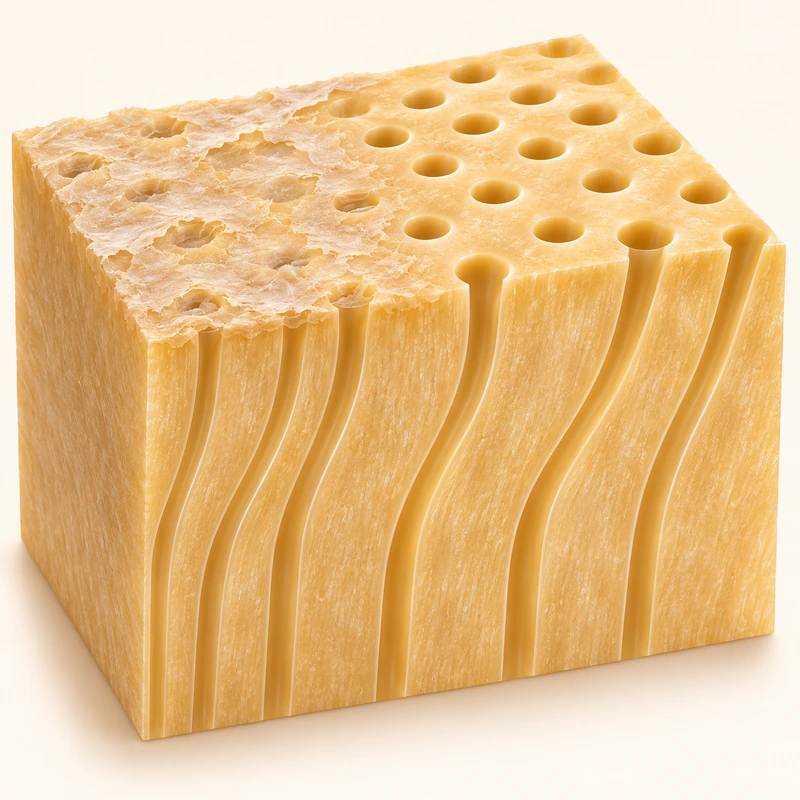
Dentinal tubules lie in the dentin between the protective outer covering and the pulp. They are much smaller than the root canal and are part of normal tooth microstructure.
The channels contain fluid. Changes at exposed dentin can affect fluid movement, helping to explain some forms of tooth hypersensitivity.
Cold sensitivity has several possible causes. Exposed dentin, decay, cracks and other findings need to be distinguished before treatment is selected.
In dentin, not enamel.
Fluid, among other components.
No; the clinical situation needs assessment.
Three steps. No audio.
Each scene can also be selected manually.

Silent educational film with German on-screen text and simplified teaching images. Not a patient case or a promised treatment outcome. The full English explanation is available as text.
Dentin is the tooth tissue. Dentinal tubules are fine channels within it; they are not new holes caused by decay.
No. Root canals are larger spaces containing pulp tissue. Dentinal tubules are microscopic channels within the surrounding dentin.
No. The term describes fine structures in dentin, not numerous exposed nerves. Fluid movement within the tubules is one important element in hypersensitivity.
No. Exposed dentin and accessible tubules do not inevitably cause pain. Symptoms and examination findings need to be considered together.
Some sensitivity products can affect stimulus transmission. The appropriate approach depends on the cause; toothpaste does not replace assessment of new or persistent pain.
Not automatically. Sensitivity alone does not establish irreversible pulp damage. Treatment depends on the diagnosis, such as exposed dentin, decay or a crack.
You can bring this question to your appointment:
Does my sensitivity fit exposed dentin, or should other causes be investigated?
A dental examination can clarify how this relates to your findings and treatment planning.
Discuss your dental findingsAppointment selection at DoctolibDentin is the tooth tissue. Dentinal tubules are fine channels within it; they are not new holes caused by decay.
Editorial research: . General information, not an individual diagnosis or treatment recommendation. Teaching illustrations are simplified and do not depict a patient case.
If you turn this on, this website stores which guides you open, separately from advertising preferences. The markers expire after a fixed 30-day period from activation. The list is not sent to us by this feature. You can turn it off here and delete the markers.
Other people using the same browser profile can also see the markers. German and English versions share one marker. Expired entries are removed the next time you open a page with this feature; deleting browser data may remove them earlier. “Viewed” means opened, not read or completed.