How does it form?
Through mechanical preparation of a tooth surface.

The smear layer is a microscopic layer of debris on a mechanically prepared tooth surface, especially dentin. Some debris can also plug the entrances of dentinal tubules. It is neither ordinary dental plaque nor a deliberately applied filling material. Adhesive restorations and root-canal treatment must account for how the selected procedure interacts with this layer.
For training & practice ↓
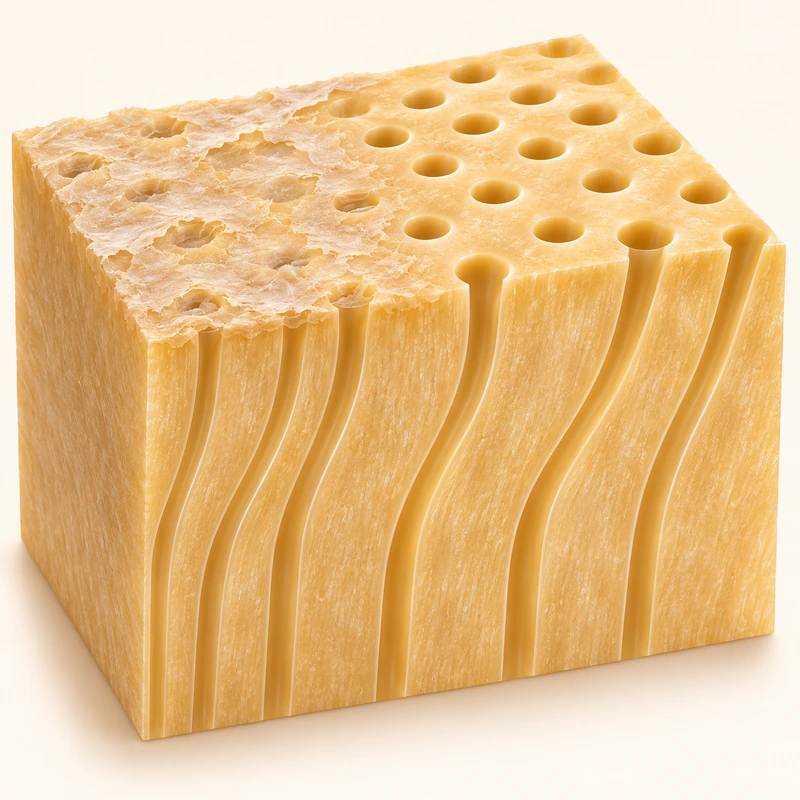
Working on dentin produces fine surface debris. Some of it may form plugs in the openings of cut dentinal tubules.
Depending on the adhesive system, the layer is removed or chemically modified and incorporated. One surface-treatment approach therefore does not suit every system.
Prepared root-canal walls can also carry a smear layer. Its management forms part of professional instrumentation and irrigation protocols.
Through mechanical preparation of a tooth surface.
At bonding interfaces and prepared root-canal walls.
No; the procedure matters.
Three steps. No audio.
Each scene can also be selected manually.

Silent educational film with German on-screen text and simplified teaching images. Not a patient case or a promised treatment outcome. The full English explanation is available as text.
The smear layer is produced by preparation. An adhesive is a deliberately applied material that interacts with the layer and underlying tooth tissue according to the system used.
No. Plaque is an adherent microbial biofilm. The smear layer arises from mechanical preparation of a tooth surface; the term describes its origin, not a particular bacterial count.
Not universally. Etch-and-rinse and self-etch adhesive systems treat the surface differently. The selected system and an appropriate professional protocol determine the approach.
They are preparation debris lodged in the openings of cut dentinal tubules. The surface layer and these plugs are distinct.
Yes. Instrumented dentin walls within a root canal can carry this layer. Irrigants and their use are selected professionally for the treatment; the solutions are not intended for self-treatment.
No. Interface treatment is only one component of bonding. Laboratory images of the smear layer alone do not guarantee the longevity of a restoration.
You can bring this question to your appointment:
How is the prepared tooth surface managed for the chosen restorative or treatment system?
A dental examination can clarify how this relates to your findings and treatment planning.
Discuss your dental findingsAppointment selection at DoctolibThe smear layer is produced by preparation. An adhesive is a deliberately applied material that interacts with the layer and underlying tooth tissue according to the system used.
Editorial research: . General information, not an individual diagnosis or treatment recommendation. Teaching illustrations are simplified and do not depict a patient case.
If you turn this on, this website stores which guides you open, separately from advertising preferences. The markers expire after a fixed 30-day period from activation. The list is not sent to us by this feature. You can turn it off here and delete the markers.
Other people using the same browser profile can also see the markers. German and English versions share one marker. Expired entries are removed the next time you open a page with this feature; deleting browser data may remove them earlier. “Viewed” means opened, not read or completed.