Which unit?
For example, mGy·cm².

Dose–area product, or DAP, combines a radiation quantity within the X-ray beam with the beam area at the same position. Technically, the air-kerma–area product is commonly used. The value, for example in mGy·cm², supports recording and quality assurance. It is neither effective dose in sieverts nor a direct measure of personal health risk.
For training & practice ↓
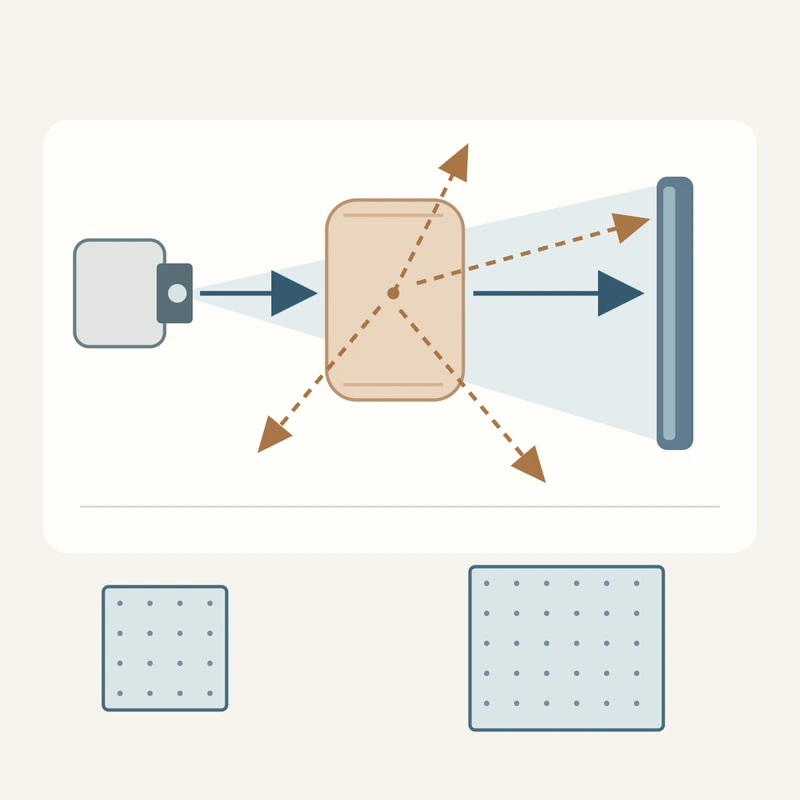
For the same radiation quantity, a larger beam area gives a higher dose–area product. The value therefore accounts for the field’s area as well. Its unit combines dose and area.
Equipment readings or measurements help monitor imaging protocols. Meaningful comparisons require suitable procedures and conditions; one number does not describe the entire examination.
Which organs lie in the beam also matters. DAP alone therefore cannot reveal a person’s effective dose or probability of developing disease without further information.
For example, mGy·cm².
Recording, comparison and optimisation.
No; exposed organs and examination conditions also matter.
Three steps. No audio.
Each scene can also be selected manually.

Silent educational film with German on-screen text and simplified teaching images. Not a patient case or a promised treatment outcome. The full English explanation is available as text.
DAP is a measurable or equipment-derived exposure quantity. Effective dose incorporates weighted organ doses. They cannot be equated without an appropriate model.
The product links a radiation quantity to an area. Different area units change the number, so units must match when values are compared.
No. Clinical tasks, fields and protocols may differ. Unusual values are assessed against appropriate comparison data within quality assurance.
No. They support optimisation of typical examinations and are not individual dose limits. Each exposure still requires justification.
You can bring this question to your appointment:
Which dose quantity was recorded, and how do you interpret it for this particular examination?
An individual assessment can clarify the findings and whether referral is needed.
Arrange an assessmentAppointment selection at DoctolibDAP is a measurable or equipment-derived exposure quantity. Effective dose incorporates weighted organ doses. They cannot be equated without an appropriate model.
Editorial research: . General information, not an individual diagnosis or treatment recommendation. Teaching illustrations are simplified and do not depict a patient case.
If you turn this on, this website stores which guides you open, separately from advertising preferences. The markers expire after a fixed 30-day period from activation. The list is not sent to us by this feature. You can turn it off here and delete the markers.
Other people using the same browser profile can also see the markers. German and English versions share one marker. Expired entries are removed the next time you open a page with this feature; deleting browser data may remove them earlier. “Viewed” means opened, not read or completed.