Digital means radiation-free?
No.

Radiation protection includes justified selection, optimised technique and quality assurance for X-ray examinations. Its aim is to avoid unnecessary exposure and obtain medically needed images with adequate diagnostic quality.
For training & practice ↓
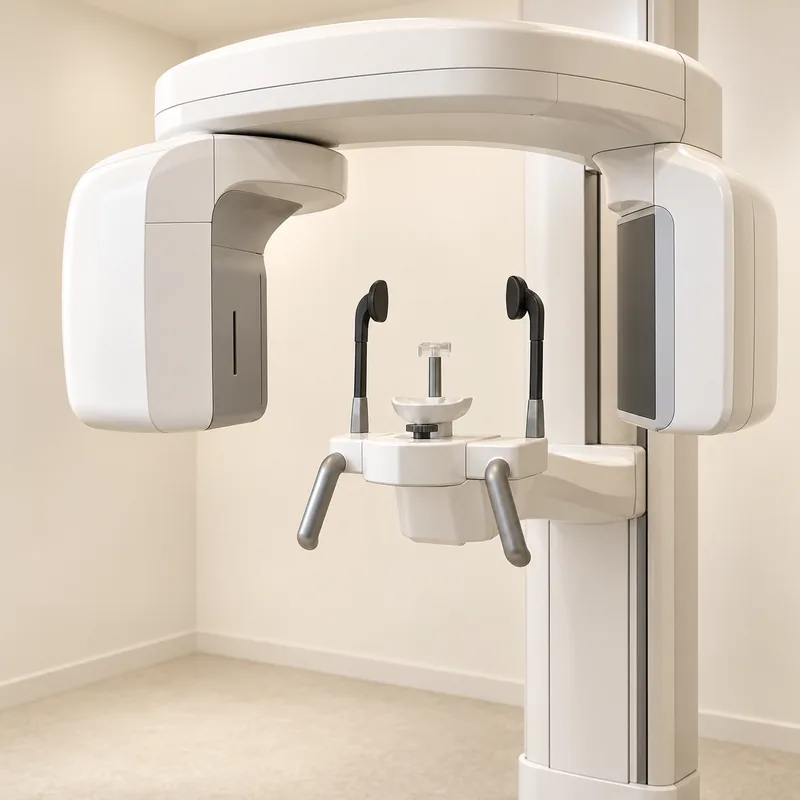
Imaging starts with a clinical question. In Germany, a dentist with the required radiation-protection expertise must weigh expected benefit against radiation risk. A new visit does not automatically mean a new image.
The field and settings should fit the question and the person. Lower dose is useful only when the image remains diagnostically adequate. CBCT is not a routine screening examination.
Relevant existing images, appropriate positioning and checked equipment help prevent needless repeats. Information about earlier examinations supports planning.
No.
Yes, when they may be relevant.
No.
Three steps. No audio.
Each scene can also be selected manually.

Silent educational film with German on-screen text and simplified teaching images. Not a patient case or a promised treatment outcome. The full English explanation is available as text.
Radiation protection means justified, optimised use. A necessary examination may be worthwhile when its benefit outweighs its risk.
No. Digital X-rays also use ionising radiation and require justification.
No. Examination selection, a limited field, suitable settings and quality assurance are central. Protective measures depend on the technique and applicable rules.
Not necessarily. It must adequately answer the clinical question. An unusable image may lead to additional examinations.
You can bring this question to your appointment:
What benefit do we expect from this image, and how is it limited to the clinical question?
Discuss your individual findings and whether a referral is appropriate.
Discuss your findingsAppointment selection at DoctolibRadiation protection means justified, optimised use. A necessary examination may be worthwhile when its benefit outweighs its risk.
Editorial research: . General information, not an individual diagnosis or treatment recommendation. Teaching illustrations are simplified and do not depict a patient case.