Who decides?
A doctor or dentist with the required qualification.

In Germany, the rechtfertigende Indikation is the qualified decision whether and how an application of ionising radiation is medically justified. The health benefit of the individual examination must outweigh its radiation risk. This decision is made before exposure.
For training & practice ↓
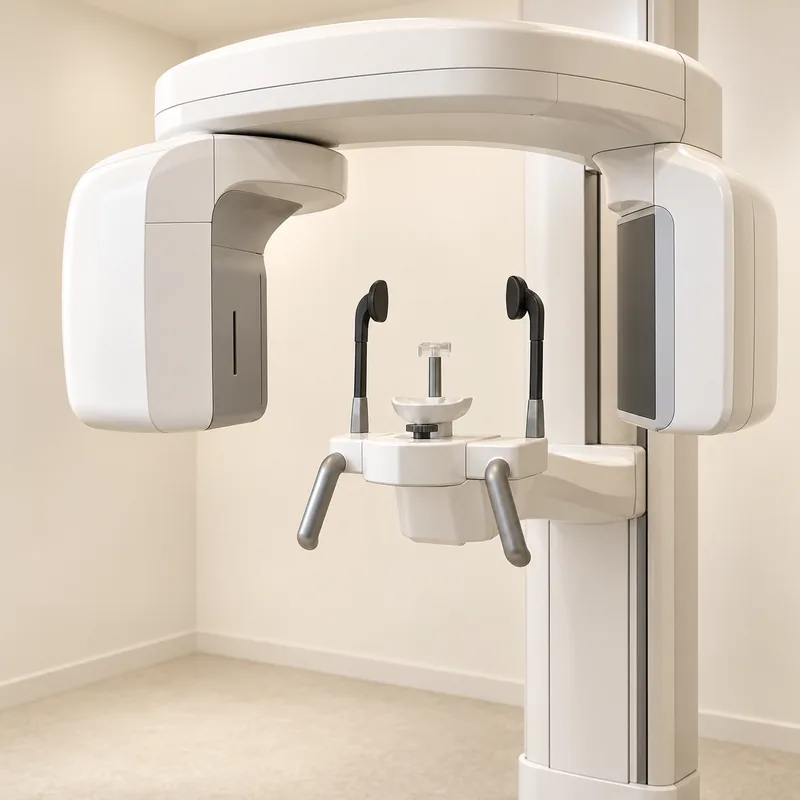
Symptoms and examination establish a diagnostic question. Imaging must offer expected benefit for that question; wanting an image alone does not justify exposure.
A doctor or dentist with the required radiation-protection qualification makes the decision. A referral does not remove this duty. Both whether and how to perform the examination are assessed.
Relevant previous images and medical findings are considered. They may show that an existing image suffices or that another examination would be more suitable.
A doctor or dentist with the required qualification.
No.
Yes, when they concern the current question.
Three steps. No audio.
Each scene can also be selected manually.

Silent educational film with German on-screen text and simplified teaching images. Not a patient case or a promised treatment outcome. The full English explanation is available as text.
A preference explains what someone wants to achieve. Radiographic justification assesses whether the particular exposure is medically warranted for that purpose.
No. Section 119 of the German Radiation Protection Ordinance requires justification even when another doctor or dentist requests the examination.
No. Consent and professional benefit-risk assessment serve different purposes. The qualified decision remains necessary.
Yes. What matters is the use of ionising radiation, not whether images are recorded on film or digitally.
You can bring this question to your appointment:
Which specific question and expected benefit justify this X-ray examination?
Discuss your individual findings and whether a referral is appropriate.
Discuss your findingsAppointment selection at DoctolibA preference explains what someone wants to achieve. Radiographic justification assesses whether the particular exposure is medically warranted for that purpose.
Editorial research: . General information, not an individual diagnosis or treatment recommendation. Teaching illustrations are simplified and do not depict a patient case.